
Commercial Electrical Panel Upgrades: When You Need One and What to Expect
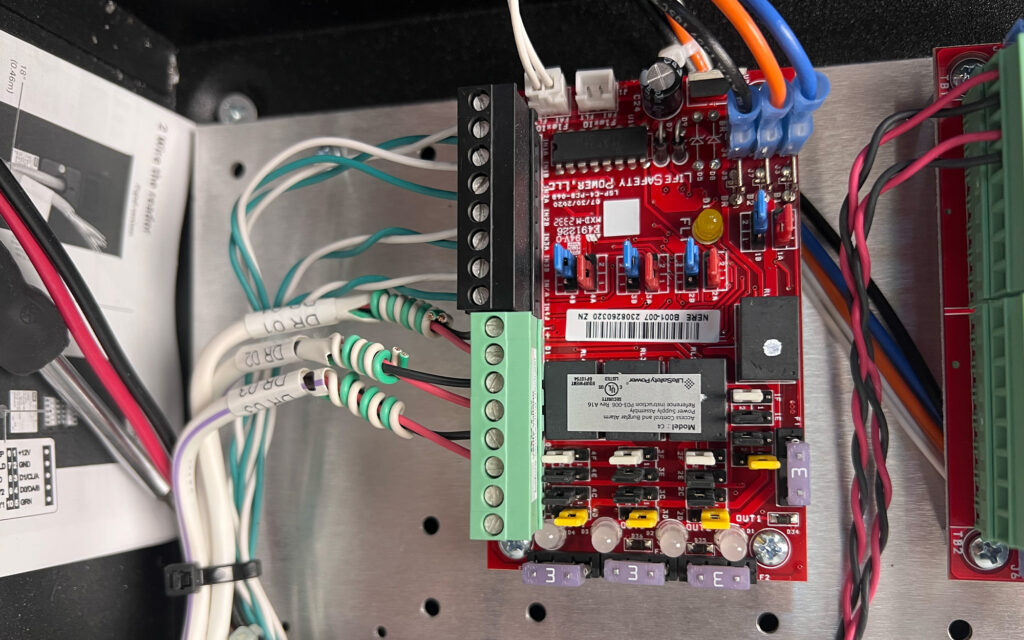
Constant breaker trips and new equipment signal it’s time for a commercial electrical panel upgrade. Here’s when to act and what the process involves.
Commercial EV Charger Installation in California: Costs, Permits, and Title 24 Requirements

Title 24, permits, costs, and panel requirements for commercial EV charger installation in California. Ring & Ping handles the full scope.
Ring and Ping Network Cabling Orange County

Upgrade your business with premium network cabling options in Orange County. High performance and reliability ensure seamless connectivity for your operations.
Ultimate Guide to Structured Cabling Systems for Businesses
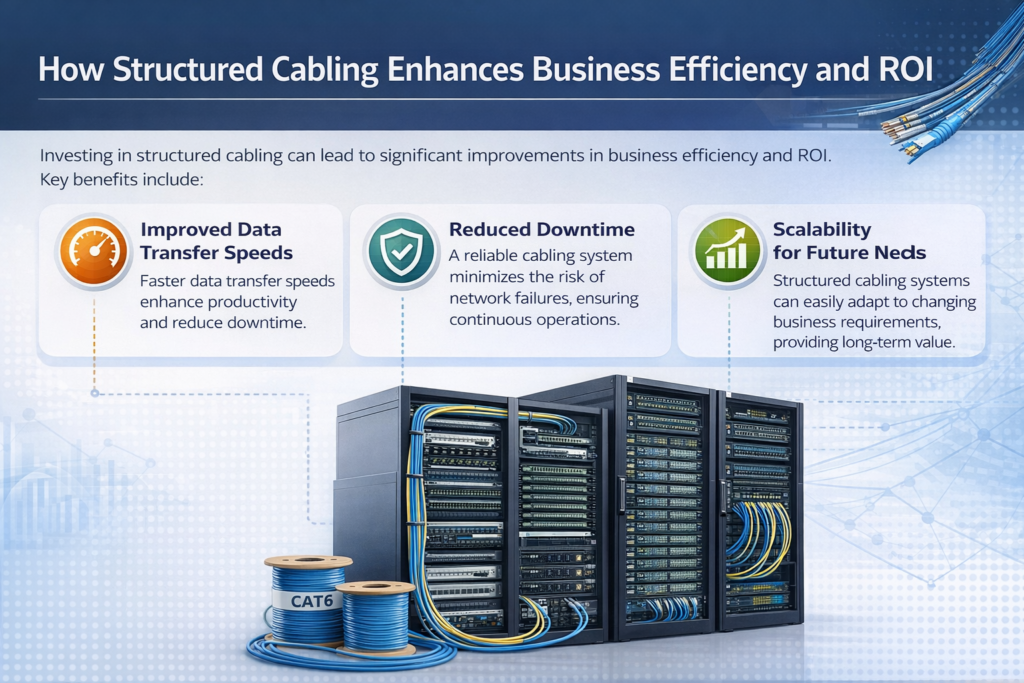
Transform business operations with structured cabling systems. Enhance efficiency, streamline connectivity, and boost productivity in your workplace today.
Ring and Ping FAQ: Services, How It Works & What We Offer

Gain insights from the comprehensive FAQs about Ring and Ping Inc. Learn how to maximize your experience and resolve common queries effectively.
Best Practices for Network Rack & Cabinet Installation

Ensure a secure network rack setup with these best practices. Streamline management, protect data, and optimize performance with expert tips for reliability.
CAT6A Cable Repair and Maintenance
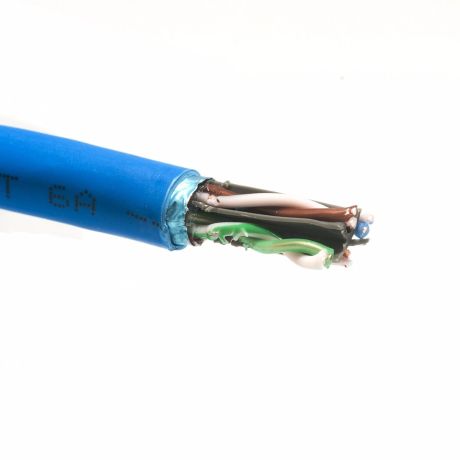
Master CAT6A cable repair with expert tips and essential maintenance solutions. Ensure your network runs smoothly and efficiently with our comprehensive guide.
Benefits of Energy-Efficient Lighting Upgrades

Benefits of Energy-Efficient Lighting Upgrades for Commercial Businesses in Southern California Upgrading outdated lamps and ballasts to modern LED fixtures with smart controls significantly reduces energy consumption, lowers maintenance costs, and improves overall light quality in commercial environments. For Southern California businesses — including warehouses, manufacturing facilities, hospitals, offices, and law firms — LED retrofits deliver measurable kWh savings, reduced operating expenses, and safer, more productive workspaces. This guide explains how energy savings are achieved, outlines key operational benefits, and highlights available California and utility incentives. It also explores industry-specific solutions and demonstrates how smart lighting controls further enhance returns. You’ll find typical savings ranges, practical examples, rebate guidance, control comparisons, and clear recommendations for selecting fixtures and qualified installers. The focus is on practical outcomes: maximizing ROI, capturing available rebates, minimizing downtime during installation, and delivering long-term value across Orange County, Los Angeles County, Riverside County, and San Diego County. By the end, you’ll be equipped to estimate energy and maintenance savings, identify incentive opportunities, and plan a retrofit strategy that balances upfront investment, rebates, and day-to-day operational needs. What Are the Key Energy Savings from Commercial LED Lighting Benefits? LED retrofits typically cut lighting energy use by 30–75%, depending on the existing technology and whether controls are added. LEDs deliver these savings through higher efficacy (lumens per watt), directional light that reduces waste, and compatibility with dimming and occupancy controls that shorten run-hours. Replacing fluorescent troffers, metal-halide high-bays, or legacy HID fixtures with LEDs typically reduces annual kWh consumption and eases HVAC load because LEDs run cooler. This section quantifies common savings, explains the main efficiency drivers, and includes a comparative fixture table to show the energy and maintenance differences that drive ROI. The examples and comparisons that follow help facility teams turn fixture choices into annual cost and maintenance projections. At the fixture level, LEDs replace low‑efficacy lamps with units that produce more usable light per watt, while optics and controls focus light where it’s needed. Understanding those differences makes it easier to see how a retrofit delivers immediate energy reductions and long-term maintenance savings. The next subsection gives a direct calculation example for a typical facility. How Much Can Businesses Save on Energy Costs with LED Lighting? Most projects yield 30–75% savings on lighting energy. Warehouses and high‑bay installations are typically at the higher end; interior office retrofits are closer to the middle. Results depend on the baseline equipment, annual operating hours, fixture efficacy gains, and whether controls are installed. For example, converting 100 fixtures each drawing 400 W (HID) to 150 W high‑bay LEDs reduces load by 25 kW per hour. At 3,000 annual hours and $0.18 per kWh, the annual savings are roughly 25 kW × 3,000 × $0.18 = $13,500. Use this simple formula to quickly generate side‑by‑side business‑case estimates. Adding dimming schedules or daylight harvesting usually increases savings and shortens payback. These numeric benchmarks support budgeting and rebate targeting and provide a closer look at why LEDs are inherently more efficient. What Makes LED Lighting More Energy Efficient Than Traditional Options? LEDs outperform fluorescents and HIDs primarily because they deliver more lumens per watt, lose less light within the fixture, and use more efficient drivers that reduce wasted energy. Modern commercial LEDs typically deliver 120–170 lm/W, compared with 50–100 lm/W for older fluorescent or HID systems, so fewer watts are required to produce the same usable light. Directional optics and well‑designed fixtures cut spill and improve uniformity, which can mean fewer fixtures or lower lumen packages to meet illuminance targets. LEDs also run cooler and avoid ballast losses associated with legacy lamps, reducing HVAC interaction and total building energy use. Those technical strengths are the backbone of energy‑savings calculations, making LEDs ideal for retrofit projects where layout and controls can be optimized. Fixture TypeTypical Wattage (Replaced) / LED WattageEstimated Annual Energy Use ChangeHID High-Bay → High-Bay LED400 W → 150 W~62% kWh reduction per fixtureFluorescent Troffer → LED Troffer4×32 W → 40–50 W linear LED~50–60% kWh reduction per fixtureCFL/PAR Retrofit → LED Downlight75 W → 18–25 W~70% kWh reduction per fixture How Do Energy-Efficient Lighting Solutions Improve Business Operations? Beyond energy and cost savings, LED upgrades improve operations by delivering better light quality, fewer maintenance interruptions, and more consistent performance. Higher CRI and improved uniformity increase task accuracy in manufacturing and reduce inspection errors, while stable, tunable light in offices improves comfort and staff satisfaction. Fewer lamp changes and longer service intervals reduce labor, lift rentals, and production downtime in facilities with high ceilings. Those operational gains are indirect but meaningful— they complement measured energy savings and strengthen the retrofit business case. Below, we outline specific productivity and safety outcomes and include a contractor-deployment example demonstrating fast, low‑disruption installation. Better lighting directly supports productivity: improved visibility and reduced eye strain help teams perform detailed tasks more accurately. Modern LED systems also enable predictable maintenance schedules through long‑life ratings and far fewer emergency failures, simplifying inventory and planning. Ring and Ping Communications has completed rapid deployments for commercial clients across Southern California, coordinating low‑voltage wiring and fixture swaps to minimize downtime and keep sites safe—an approach that often accelerates payback. That operational reliability leads to a discussion of color rendering, CRI, and other visual factors that affect performance. In What Ways Does Improved Lighting Quality Enhance Workplace Productivity? Higher color rendering index (CRI), the correct correlated color temperature (CCT), and uniform illuminance reduce visual errors and cognitive fatigue in offices and industrial areas. A CRI of 80–90+ improves color discrimination for quality control, medical assessments, and fine assembly, while neutral-to-slightly-cool CCTs in task zones sharpen alertness. Offices and law firms benefit from low‑glare fixtures and consistent lighting that reduce screen reflections and make reading easier, improving focus. Improved lighting also reduces complaints and task errors, yielding soft‑cost savings that complement energy benefits and justify investing in better fixtures. How Do Reduced Maintenance Costs Impact Commercial Lighting Efficiency ROI? LEDs commonly exceed 50,000 hours of life—many times longer than fluorescent tubes or HID
Master the Basics: Access Control Glossary & Definitions

Unlock the essentials of access control with our glossary. Learn key door access terms and security definitions to enhance your understanding today!
Top Anaheim Network Cabling Services for Your Business Needs

Optimize your business with top Anaheim network cabling services. From fiber optics to security systems, they ensure seamless connectivity and reliability.
Fiber Optics in Los Alamitos: Why Ring and Ping Stands Out
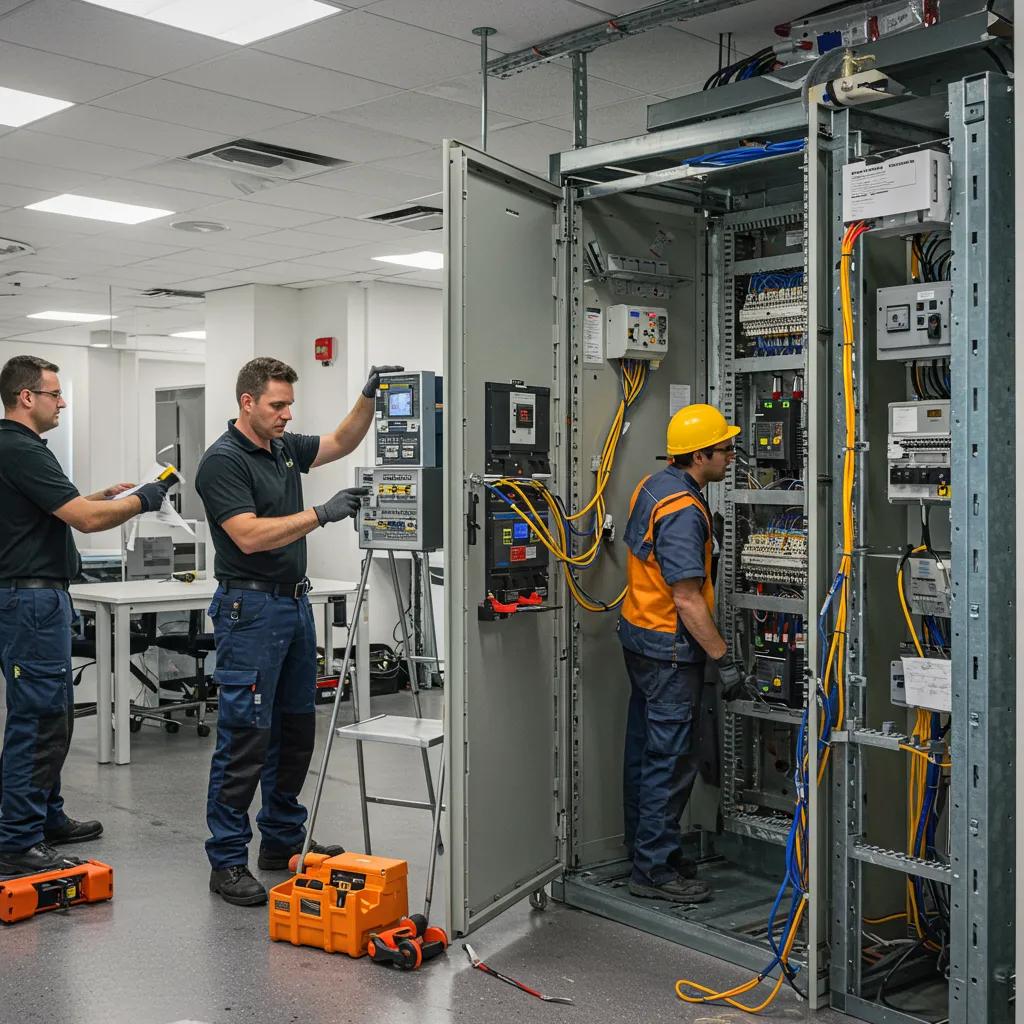
Learn why Ring and Ping excels in fiber optics and network cabling in Los Alamitos. Our solutions ensure reliability and top-notch security for all your needs.
Boost Your Business with Commercial Cabling in Santa Ana
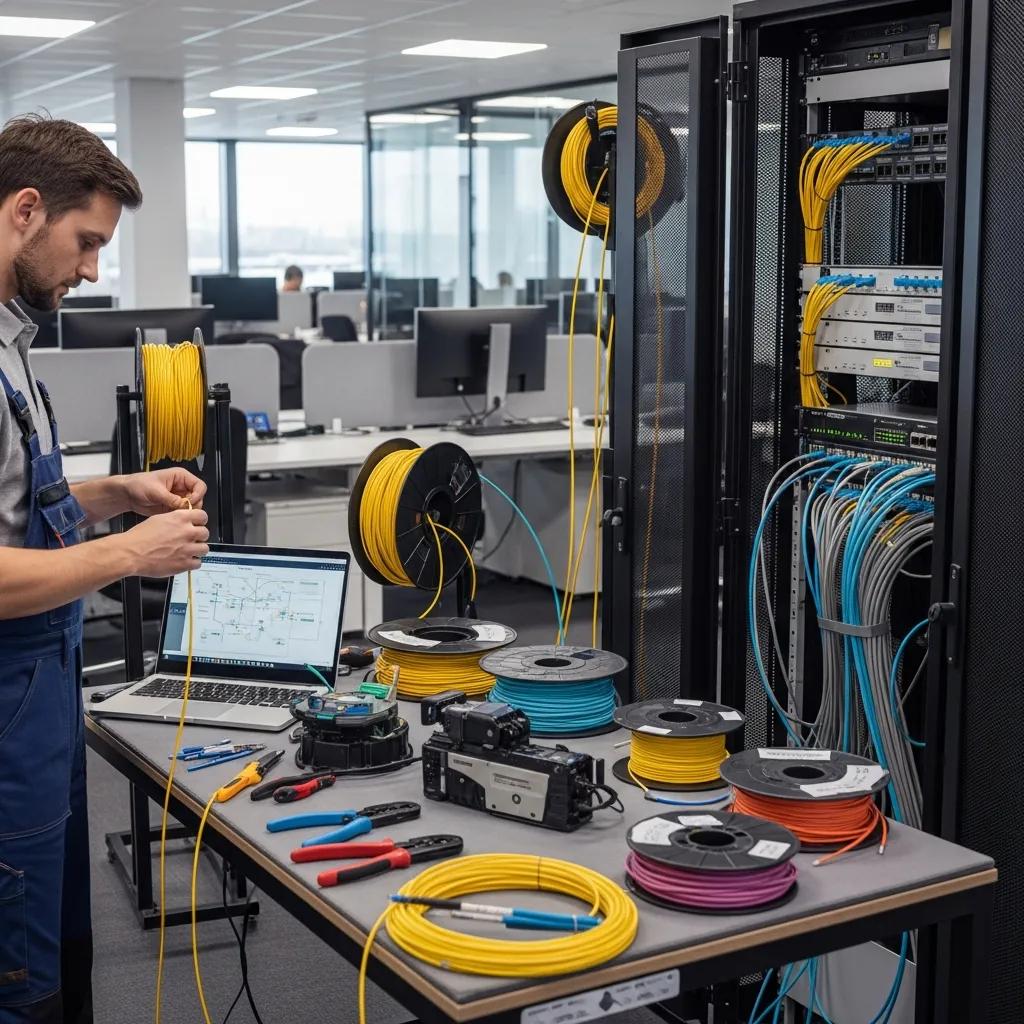
Transform your business’s connectivity with expert commercial cabling in Santa Ana. Enhance efficiency with reliable data cabling and network wiring today!
Legal Firm Cabling & Electrical Services

Secure, reliable cabling and electrical services tailored for law firmsLaw firms need infrastructure that protects client confidentiality and keeps operations running without interruptions. Thoughtful, structured cabling, paired with well-designed electrical systems, is the physical backbone that delivers reliability.This guide shows how structured cabling, commercial electrical wiring, and low-voltage systems work together to reduce exposure, support compliance, and minimize downtime for legal practices. You’ll learn how cabling choices (copper vs. fiber), electrical strategies (dedicated circuits, panel upgrades, surge protection), and low-voltage integrations (PoE, access control, surveillance) affect security, continuity, and scalability in a law office. We map key compliance touchpoints—ethical rules, electrical codes, and data-privacy obligations—to concrete infrastructure controls and documentation that auditors expect. Finally, local examples show how Southern California providers deliver certified installations, warranties, and rapid response, giving firms a single, coordinated solution for cabling, electrical, and security needs. Throughout, industry terms such as legal office network, secure data cabling, law firm electrical, and low-voltage wiring appear in context to help practice managers and IT leads make informed purchasing decisions.Why is Secure Structured Cabling Essential for Law Firms?Structured cabling is the organized system of cables, connectors, patch panels, and pathways that delivers predictable, testable network performance and supports secure data flow in legal offices. When cabling is grouped into documented zones with labeled terminations, the chance of accidental exposure falls, and segmentation becomes straightforward—improving auditability and uptime. Thoughtful cabling supports encryption endpoints, VLANs, and physical access controls at consolidation points, creating layers of protection for client data. Certified testing, as-built drawings, and port-level labels enable teams to trace connections during incident response and satisfy auditors; modular design also allows you to upgrade bandwidth or add runs without tearing out walls.The comparison below clarifies standard cable options and their best use cases for law firms.CAT6 / CAT6A: Cost-effective copper for workstations and PoE devices, offering reliable throughput for practice management software and VoIP.CAT7: Higher-spec, shielded copper for dense wiring runs or locations with strong EMI near electrical equipment.Fiber Optic (OM3 / OM4 / OS1): High-bandwidth links for long runs between floors or buildings—ideal for backups, cloud services, and fast interconnects.This helps you decide when copper is appropriate and when fiber is the better backbone—information that guides how electrical provisioning should align with network design.Different cabling types compared for legal practice deployment:Cable TypeCharacteristicBest Use-CaseCAT6 / CAT6AUp to 10 Gbps on short runs; affordable and supports PoEWorkstations, VoIP, and general office wiringCAT7Shielded; higher resistance to EMI in noisy areasRooms near heavy electrical equipment or dense rack wiringOM3 / OM4 FiberHigh bandwidth across longer distances; low latencyInter-floor/backbone links, backups, cloud syncOS1 SinglemodeVery long-distance single-mode linksCampus or inter-building connectivityThis table helps IT teams pick cable types that match bandwidth and security needs. Next, we’ll look at how structured cabling practices specifically strengthen data security inside law offices.How does structured cabling enhance data security in legal offices?Structured cabling improves physical security by creating predictable, enclosed pathways and clearly labeled endpoints, reducing the risk of unauthorized tapping and accidental cross-connections. Locking backbone runs, patch panels, and racks behind access control lowers physical intrusion risk and makes forensic tracing straightforward during reviews. Cable maps support VLAN and port-based policies that limit lateral movement between general office networks and sensitive server or document-storage zones. Certified testing produces objective evidence—link certification reports and port test logs—that connectivity meets spec and hasn’t been altered since install, which auditors and incident responders expect. Best practices include secure server rooms, tamper-evident conduit, and formal change control; these measures protect electronic records and privileged communications.Those protections naturally lead to decisions about transmission media—chiefly whether fiber optics provide stronger security and performance for mission-critical links.What are the benefits of fiber optic cabling for legal practices?Fiber optic cabling delivers higher bandwidth, lower latency, and immunity to electromagnetic interference—making it an excellent backbone for firms that use cloud storage, encrypted backups, and video conferencing. Fiber is harder to tap covertly than copper because intercepts require specialized equipment and cause detectable signal loss, which strengthens physical-layer security for sensitive transfers. For inter-floor or inter-building links, OM3/OM4 multimode or OS1 singlemode fiber supports heavy backup and replication traffic without distance-related degradation. Fiber also future-proofs infrastructure as case loads and electronic evidence needs grow; upgrades often mean swapping transceivers rather than re-running cable. When paired with certified termination and test reports, fiber provides both performance and provable integrity for compliance reviews.Choosing fiber for backbone runs and copper at endpoints balances cost, security, and maintainability. Next, we’ll show how electrical provisioning must align with those network choices.What Electrical Wiring Solutions Support Legal Office Operations?Electrical wiring solutions ensure stable, code-compliant power to critical systems—servers, network switches, VoIP phones, and essential lighting—so client services stay available and data integrity is preserved. Standard solutions include dedicated circuits for server rooms and network closets, panel upgrades to support capacity and redundancy, and surge protection and UPS integration to prevent outages. Proper load calculations and clear labeling prevent overloads and enable safe maintenance windows, while grounding and bonding protect sensitive electronics. Routine inspection, documentation, and coordination with IT let electrical systems support redundancy and failover designs that keep the firm operating during incidents.The following table summarizes standard electrical options and how they map to law office use-cases.SolutionCharacteristicTypical BenefitDedicated CircuitsSeparate breakers for critical equipmentIsolates servers/PoE switches; reduces nuisance tripsPanel UpgradesIncreased ampacity and breaker capacitySupports growth; lowers overcurrent riskUPS & Surge ProtectionBattery backup and transient suppressionMaintains uptime and protects hardware during disturbancesPDUs & Circuit LabelingRack-level distribution and documentationSimplifies maintenance and troubleshootingThis mapping helps practice managers prioritize investments that reduce downtime and equipment risk. Next, we detail compliance-focused electrical services and how they’re delivered.Electrical services that support compliance and reliability:Dedicated server-room circuits: Keep core IT equipment on isolated power to reduce interruptions.Panel upgrades and redistribution: Meets code and creates capacity for future expansion.Surge protection and UPS deployment: Provides clean power and orderly shutdowns for backups.Which electrical services ensure compliance in law offices?Licensed electrical work that follows local code, backed by permits, inspection sign-offs, and detailed panel schedules, ensures law offices meet safety and regulatory expectations. Compliance-focused services include load studies
Manufacturing Plant Cabling & Electrical Services

Manufacturing Plant Cabling & Electrical Solutions: Practical, Reliable Services for Industrial FacilitiesAs a leading provider in Southern California, Ring and Ping Communications brings extensive expertise to manufacturing plant cabling and industrial electrical services. These services encompass the planning, installation, testing, and maintenance of power distribution, machine hookups, and structured network cabling to keep production lines running safely and predictably. This guide outlines how purpose-built electrical infrastructure and certified cabling reduce downtime, enhance safety, and enable modern automation across factories and warehouses. Plant managers and maintenance teams will get clear guidance on core services, how structured cabling and fiber support IIoT and fast control networks, and which wiring practices improve PLC, SCADA, and motor-control reliability. The guide also addresses warehouse and on-site data room cabling, emergency electrical response to limit production loss, and practical vendor-selection points for Southern California projects. Expect technical comparisons, EAV-style tables that clarify scope and cost drivers, and checklists for commissioning and compliance. Throughout, we reference industry standards—NEC/NFPA codes, TIA/EIA cabling guidance, and Industrial Ethernet—and demonstrate how thoughtful design delivers measurable gains in uptime and safety.What essential industrial electrical services do manufacturing plants need?Industrial electrical services are the foundation of continuous, safe production. They provide rated power, distribution, and protection tailored to heavy equipment and plant processes. Typical offerings include power-distribution design, motor control centers, and panel installation, dedicated circuits for large machinery, lighting, and outlet upgrades, and preventative safety audits to maintain NEC and Cal/OSHA compliance. Correctly scoped work prevents overloads and single-point failures and supports phased expansions and maintenance windows that limit downtime. Clear documentation, consistent labeling, and formal commissioning confirm systems meet OEM and plant safety requirements—protecting schedules and people.Here’s a concise list of the primary services factories rely on and why they matter.Heavy machinery electrical installation: Dedicated power and correct starting/configuration to avoid voltage sag and nuisance trips.Power distribution & panel upgrades: Capacity and selective coordination for breakers and protective devices to safeguard equipment.Dedicated circuit installation: Isolates critical equipment to prevent cross-circuit overloads and enable targeted maintenance.Industrial lighting and outlet work: Better visibility, improved safety, and energy efficiency across production areas.These core services map directly to operational concerns—reliability, safety, and capacity planning—and set up a practical comparison of typical service scopes and power requirements.The table below compares common industrial electrical solutions, their key attribute, and typical values that drive scope and cost during planning.ServiceKey AttributeTypical SpecificationHeavy machinery electricalPower rating5 kW to 500 kW per unit, requires dedicated circuits and appropriate NEMA enclosuresPower distribution & panelsBus capacity225 A to 2000 A feeders with selective coordination for breakersDedicated circuitsProtectionCircuit breakers sized per motor NEMA full-load current and starting characteristicsLighting & outletsEnergy & safetyLED upgrades, emergency lighting circuits, and GFCI/isolated outlets near wet areasThis side-by-side view shows how equipment power, protection, and distribution choices affect materials, labor, and schedule—helpful when preparing procurement or bids.How does heavy machinery electrical installation support factory operations?Proper heavy-machinery installation delivers stable, correctly phased power with the right protective devices—preserving motor life and preventing unexpected stops. We start with a power assessment to size voltage, inrush current, and required dedicated circuits, then proceed to conduit routing, terminations, and coordination of motor starters or VFDs, as specified. Commissioning covers megger and continuity testing, clamp-on current checks during initial runs, and clear labeling of cables and panels for maintenance. Coordinating with OEM PLC and I/O specs protects signal integrity and avoids control faults. Thorough testing and documentation reduce startup defects, speed ramp-up, and leave traceable records for troubleshooting.What are the best practices for electrical safety and code compliance in manufacturing?Compliance with NEC/NFPA and Cal/OSHA begins with a comprehensive electrical audit and arc-flash analysis to identify hazards, PPE requirements, labeling, and safety boundaries. Best practices include coordinated lockout/tagout procedures with operations, preventative maintenance schedules, and current single-line diagrams and panel schedules for inspections and emergencies. Routine testing of protective devices, surge suppression, and grounding integrity lowers safety risk and equipment damage. Maintaining clear records of audits, permits, and corrective actions simplifies inspections, reduces regulatory exposure, and keeps production running. These compliance steps naturally lead into cabling strategies that protect signal integrity in electrically noisy environments.Our Unwavering Commitment to Industry Standards and CertificationsAt Ring and Ping Communications, our authority is built on a foundation of strict adherence to the most rigorous industry standards and certifications. We understand that in manufacturing, there’s no room for compromise when it comes to safety, reliability, and performance. Our certified technicians are extensively trained and regularly updated on the latest codes and best practices, ensuring every project meets or exceeds expectations.National Electrical Code (NEC) / NFPA 70: The benchmark for safe electrical design, installation, and inspection to protect people and property from electrical hazards.National Fire Protection Association (NFPA) Standards: Beyond NEC, we integrate broader NFPA guidelines for fire safety, emergency systems, and hazardous locations.Cal/OSHA Compliance: Ensuring all electrical and cabling work adheres to California’s specific occupational safety and health regulations, safeguarding your workforce.TIA/EIA Cabling Guidance: Adhering to Telecommunications Industry Association/Electronic Industries Alliance standards for structured cabling ensures optimal network performance, longevity, and future scalability.BICSI Best Practices: Following Building Industry Consulting Service International guidelines for telecommunications infrastructure design and installation, guaranteeing professional-grade, high-performance network solutions.Industrial Ethernet Standards: Implementing robust solutions for real-time control networks, ensuring deterministic communication and seamless integration with OT systems.This unwavering commitment to compliance and quality not only simplifies regulatory inspections but also provides peace of mind, knowing your critical infrastructure is built to last and perform under demanding industrial conditions.How does manufacturing plant network cabling improve industrial connectivity?Network cabling provides the physical layer, preserving bandwidth, latency, and signal integrity for control systems, IIoT sensors, and machine vision. Structured cabling and fiber create predictable performance for Industrial Ethernet and real-time data flows; good pathway planning and separation from power lines limit EMI and cross-talk. Choose copper for short runs and PoE devices, and fiber for long backbones or EMI-prone zones—this gives resilient OT and IT communications. Certified installation and testing to TIA/EIA and BICSI standards protect warranties and provide traceable performance for future upgrades.Key benefits cabling brings to
Financial Institution Cabling & Electrical Solutions

Financial Institution Cabling & Electrical Solutions: Secure, Compliant, High‑Performance Infrastructure for Banks and Data CentersFinancial‑sector cabling and electrical work combines careful design, certified installation, and rigorous testing of network cabling, fiber, power systems and low‑voltage security wiring. When implemented to standards, these systems deliver secure, auditable networks with redundant power and active monitoring so banking services stay online, data remains protected, and audits are straightforward. This guide breaks down what banks and data centers need from physical infrastructure, why finance environments demand specialized approaches for latency‑sensitive trading and branch continuity, and how to meet regulations like PCI DSS and the NEC. You’ll find guidance on media selection, redundant power topologies, and how surveillance and access control wiring support secure network segmentation. Topics covered: regulatory drivers and uptime, fiber advantages for trading and data centers, structured cabling best practices, electrical redundancy and code compliance, security cabling, and practical service options for finance projects.Meet Our Expert ContributorsSarah ChenLead Solutions Architect, Ring and Ping CommunicationsSarah brings over 18 years of experience in designing and implementing secure, high-performance network and electrical infrastructure for financial institutions. Her expertise spans fiber optics, structured cabling, and compliance with critical standards like PCI DSS and FFIEC, ensuring robust and auditable systems for banks and data centers.David MillerSenior Electrical Engineer, Ring and Ping CommunicationsWith a decade of specialized experience in critical power systems, David focuses on redundant electrical designs, UPS integration, and generator solutions tailored for financial environments. He ensures all installations meet stringent NEC and local California codes, providing unparalleled uptime and safety for mission-critical operations.Why financial institutions need specialized cabling and electrical solutionsBanks and trading operations combine extreme availability requirements, strict regulatory controls, and latency‑sensitive workloads. Off‑the‑shelf commercial infrastructure often can’t meet those needs reliably. The right design pairs low‑latency media and careful cable routing with redundant power and documented, certified installations. The result: fewer outages, verifiable compliance, and preserved transaction integrity — all of which protect revenue and reputation. These drivers point teams toward fiber backbones, shielded structured cabling, and UPS/generator architectures tailored to finance environments. The sections that follow explain the compliance frameworks that shape those choices.Financial environments require these capabilities for a few clear reasons:High‑speed, low‑latency transmission: trading systems and replication demand minimal delay.Regulatory compliance and auditability: physical systems must be documented and tamper‑evident.Uptime and redundancy: transaction processing and customer services can’t tolerate long outages.Those three priorities drive technical decisions for cabling, power and security. The next section covers the standards that govern finance‑grade infrastructure.What key compliance standards apply to financial infrastructure?The main standards you’ll encounter include PCI DSS for payment card environments, FFIEC guidance and GLBA/SOX for data governance, NEC (and state amendments) for electrical safety, and industry design frameworks like TIA/EIA and BICSI for structured cabling. Each adds practical requirements: PCI DSS limits physical access to payment networks and favors tamper‑evident wiring; NEC and California rules dictate conductor sizing, grounding and conduit; TIA/BICSI require labeling, path diversity and testing to maintain traceability. Meeting these rules means using certified installers, producing detailed test records, and choosing resilient architectures auditors can verify during inspections. Proper documentation also smooths insurer and auditor reviews and supports business continuity planning.How do uptime and data security affect financial operations?Uptime and data security are directly tied to operational continuity and regulatory risk. Downtime or breaches interrupt transactions, damage customer trust, and can trigger fines. Trading desks and market‑data feeds are sensitive to milliseconds of delay and to packet loss; branch outages disrupt teller services and online banking. Infrastructure choices — redundant UPS topologies, generator integration, and physically segregated cabling — remove single points of failure and reduce attack surfaces. The table below shows common downtime causes and practical mitigations to guide planning and investment.Downtime CauseTypical ImpactMitigationPower lossService interruption and delayed transactionsUPS with automatic transfer switch and generator backupCable damage / path cutNetwork outage or service disruptionPath diversity, fiber rings or redundant linksHardware failurePartial service degradationN+1 or 2N redundancy and on‑site sparesSecurity breachData exposure and compliance penaltiesNetwork segmentation, encryption and tamper‑evident cablingTargeted infrastructure investment makes these risks manageable and supports continuity planning tailored to finance operations.When institutions are ready to implement, they often work with a contractor who understands both low‑voltage and electrical trades. Ring and Ping Communications is based in Southern California and provides fiber optics, network cabling (CAT5e, CAT6, CAT6A), commercial electrical work, surveillance systems and access control installations. We offer certified network cabling installations with manufacturer warranties, a 90‑day labor guarantee, industry experience including finance, fast local response, and integrated low‑voltage and electrical services as a single point of responsibility.How high‑speed fiber improves financial data centers deliver greater capacity and lower latency than copper by transmitting data as light with far less dispersion and EMI. Properly selected single‑mode or multimode fiber, tight timing for low jitter, and protected pathways reduce tampering risk while improving trading performance and inter‑site replication. Benefits include measurable latency gains for market feeds, higher sustained throughput for AI and risk models, and stronger physical security since fiber is harder to tap than unshielded copper. That combination makes fiber the backbone for trading floors, cross‑site replication and cloud interconnects.Primary advantages of high‑speed fiber:Lower propagation delay and jitter for time‑sensitive trading.Higher bandwidth for bulk replication and AI workloads.Improved physical security and easier tap detection compared with copper.These benefits support today’s trading needs and future growth. The next section explains latency use cases and scalability strategies.How does fiber optics help low‑latency trading and data transmission?Fiber reduces latency and jitter because light travels with minimal dispersion through quality fiber types — OM3/OM4 multimode for short runs and single‑mode for long links — yielding lower error rates and consistent timing. On trading floors, sub‑millisecond improvements in feed handling can be decisive. For replication, fiber supports synchronous or near‑synchronous modes with fewer retries. Fiber also isolates critical links from EMI and simplifies route diversity planning by allowing physically separate ducts and redundant topologies. Typical recommendations: single‑mode for long‑haul links and OM4 for dense, high‑throughput short‑distance interconnects.How does scalable cabling support AI, blockchain and other emerging workloads?Scalability comes from
Medical Office Cabling & Electrical Solutions

Medical Office Cabling & Electrical Services Built for Southern California Healthcare By Bryn Billman, Senior Solutions Architect at Ring and Ping Communications John specializes in designing HIPAA-compliant network and electrical systems for healthcare facilities across Southern California, ensuring optimal performance and regulatory adherence. Medical office cabling and electrical services cover the planning, installation, testing, and ongoing care of low-voltage networks and commercial electrical systems that keep clinics, imaging suites, and administrative operations running safely and efficiently. This guide walks through how structured cabling, fiber backbones, dedicated medical circuits, and emergency power work together to protect patient data, enable telemedicine and PACS workflows, and reduce downtime across Southern California facilities. You’ll find practical, HIPAA-focused cabling requirements, the electrical codes and backup-power strategies that protect clinical operations, fiber recommendations for high-bandwidth needs, security-system integration best practices, and a clear roadmap for upgrades and maintenance. We emphasize the technical controls—segmentation, shielding, isolation transformers, UPS and generator roles—then translate those choices into reliability and compliance guidance. Throughout, we reference current standards like TIA/EIA, NFPA 70 and NFPA 99 so facility planners and IT managers can make informed decisions. Knowing how cabling design enforces HIPAA physical and technical safeguards is the first step to protecting PHI and keeping clinical workflows online. This section defines the cabling controls relevant to HIPAA, shows testable installation practices, and compares options that balance compliance and performance. After outlining core requirements, we explain how structured cabling supports network segmentation and compare CAT and fiber choices for common clinical scenarios. Together these recommendations frame practical selections for medical office networks and highlight the testing and documentation auditors expect. What Are the Essential HIPAA Compliant Network Cabling Requirements for Medical Offices? HIPAA-compliant network cabling integrates physical controls, technical safeguards, and clear testing records to reduce the risk of unauthorized access to Protected Health Information (PHI) when stored or transmitted. Practical implementations include secure cable pathways, locked telecommunications closets, labeled and segregated runs, and shielded cable where electromagnetic interference could affect data integrity. Certified test results with documented pass/fail outcomes provide tangible evidence of compliance, while following TIA/EIA and BICSI best practices keeps installations aligned with industry standards. The checklist below distills the primary cabling items that support HIPAA controls and prepare a facility for reliable operation and audit readiness. Key cabling requirements include physical separation of PHI systems, consistent labeling and asset documentation, certified testing, and scheduled maintenance. These steps lower the chance of accidental exposure and streamline incident investigations. Next, we show how structured cabling enables network segmentation and physical access control for PHI-bearing equipment. To compare common cabling options used in clinical settings, the table below summarizes attributes important to HIPAA-sensitive deployments: bandwidth, distance, shielding, and compliance notes. Cabling OptionCharacteristicCompliance & Use NotesCAT6A (Shielded/UTP)Up to 10 Gbps at 100 m; option for shielding in EMI-prone areasIdeal for workstations and VoIP; use shielding near imaging or other EMI sources to protect data integrityMulti-mode Fiber (OM3/OM4)High bandwidth for short-to-medium distances within buildings (up to 300 m)Great for in-building backbones and data-center links; limits electromagnetic coupling with PHI devicesSingle-mode FiberVery long-distance, high bandwidth for campus linksBest for campus backbones and remote PACS access; fiber provides physical separation from copper PHI endpoints This comparison clarifies when to choose copper versus fiber in clinical environments: shielded copper for endpoint areas with high EMI risk, multi-mode fiber for building backbones, and single-mode for long-haul or campus links. The next subsection looks at the structured cabling controls that enforce these protections in practice. How Does Structured Cabling Ensure Patient Data Security in Healthcare? Structured cabling secures patient data by enabling logical network segmentation and robust physical controls that limit access to PHI-bearing devices and storage. Clear pathway documentation, labeled patch panels, and locked telecom closets create an auditable infrastructure that supports physical safeguard requirements. VLAN segmentation and dedicated circuits for medical devices separate PHI traffic from guest and administrative networks, shrinking the attack surface and simplifying monitoring. Certified testing—measuring return loss, length, and continuity—creates verifiable artifacts showing installations meet TIA/EIA standards and supports incident response. Consistent documentation and change logs feed scheduled audits and maintenance programs to preserve compliance over time. Those mechanisms directly inform cabling decisions for clinical workloads, including when to favor Cat6A or optical fiber for telemedicine and imaging. Which Cabling Types Support HIPAA Compliance: CAT6, Fiber Optics, and Beyond? Selecting cabling for HIPAA-sensitive environments balances bandwidth, distance, and immunity to interference while keeping clear pathways for secure data flows. CAT6A delivers 10 Gbps over 100 meters and is cost-effective for workstations and VoIP; shielded pairs are helpful near imaging equipment to reduce interference. Multi-mode fiber suits in-building backbones for EHR servers and PACS aggregation, supporting high throughput over moderate distances (up to ~300 meters). Single-mode fiber is appropriate for campus or long-haul links to off-site storage or centralized PACS. Many projects use a hybrid approach—CAT6A to endpoints and fiber for backbones—to balance performance, isolation, and cost. High-quality terminations, correct connector types, and certified test reports are essential compliance records and should be part of project handover documentation. Before fieldwork begins, planners should confirm how electrical design and cable pathways interact—see the electrical and emergency power section next. Ring and Ping Communications provides HIPAA-focused installations emphasizing certified cabling, manufacturer-backed warranties, and clear service guarantees. Our approach combines structured cabling best practices, certified testing, and thorough documentation for audit readiness, backed by a 90-day labor guarantee plus lifetime manufacturer warranty on certified cabling installations. For medical offices wanting a single qualified partner for low-voltage wiring and compliance-focused deployments, contact us to arrange a site evaluation and formal proposal. How Do Robust Electrical Solutions Support Medical Facility Operations and Safety? Code-compliant electrical systems keep clinical operations running by delivering dependable distribution, required isolation, and resilient emergency power that maintains critical equipment during outages. Healthcare electrical design must address NFPA 70 (NEC) and NFPA 99, provide dedicated circuits for critical devices, ensure proper grounding, and include testing programs for UPS and generators. Isolation transformers, automatic transfer switches (ATS), and redundant power paths reduce risk to patient
Professional IP Camera Installation for Businesses

Commercial IP Camera Installation — Southern CaliforniaProfessional IP camera installation provides Southern California businesses with dependable, networked surveillance that protects property, reduces shrinkage, and gives managers clearer operational insights. This guide walks through what modern IP systems do, why companies choose network cameras over legacy analog gear, and how a correct installation supports analytics and future growth. You’ll get a practical overview of the core technical pieces—bandwidth, PoE power, CAT6 and fiber backbones—plus deployment steps, camera form-factor trade-offs, and how to integrate cameras with access control and VMS platforms. We map the project from site survey and custom design through installation, commissioning, and maintenance, and we outline standard, industry-specific configurations for warehouses, healthcare facilities, and professional offices. Along the way, we cover video analytics, cloud vs. on-premises storage, and NVR sizing so decision-makers can scope projects and understand the key cost drivers. Finally, we explain why working with local Southern California low-voltage specialists speeds permitting, response, and certified cabling when you’re ready to move from planning to a formal bid.Why Do Businesses Need Professional IP Camera Systems?Professional IP camera systems deliver high-resolution, networked surveillance that deters crime, produces admissible evidence, and supports real-time monitoring via analytics and remote viewing. A properly designed system gives clear identification footage and automated alerts that shrink detection-to-response times and speed incident resolution. Professional installation ensures cameras cover critical sightlines, avoids blind spots, reduces false alarms, and aligns retention with legal and operational needs. Those technical and procedural controls make business-grade IP systems far more reliable than DIY or consumer setups and prepare sites for analytics and integrations that drive measurable ROI. The sections below break down the security features and operational benefits that make IP surveillance a strategic investment.How Do IP Cameras Enhance Security and Prevent Loss?IP cameras improve loss prevention by recording high-resolution, timestamped video that supports identification, investigation, and prosecution. Modern cameras include analytics—motion and loitering detection, object left/removed alerts—that raise events to operators and trigger event-based recording to save storage while improving situational awareness. Cloud or on-prem VMS with remote access lets security teams monitor multiple sites, coordinate responses, and export evidence quickly, shortening investigations and deterring repeat incidents. Real results include lower inventory shrinkage, fewer after-hours break-ins, and faster resolution of liability claims—outcomes that depend on correct placement, proper lighting, and tuned analytics.What Operational Efficiencies Can IP Surveillance Provide?Beyond security, IP surveillance drives measurable efficiency gains. Video analytics reveal bottlenecks on production lines, flag safety issues for immediate correction, and feed performance metrics into operations dashboards to reduce downtime and increase throughput. Remote monitoring cuts the need for routine physical checks, saving manager hours and enabling faster troubleshooting when incidents occur—improving KPIs like uptime and order fulfillment. When cameras integrate with inventory systems, access control, and scheduling, event correlation helps optimize staffing and floor layouts. These operational benefits begin with a thorough site assessment and a custom system design.What Comprehensive IP Camera Installation Services Does Ring and Ping Offer?A complete IP camera project follows a clear set of services: site assessment, system design, hardware procurement, cabling and network installation, camera mounting and alignment, NVR/VMS setup, testing, and maintenance. Ring and Ping Communications is a one-stop, low-voltage provider across Southern California—covering Orange County, Los Angeles County, Riverside, and San Diego—with integrated services for network cabling, fiber optics, electrical support, and surveillance systems. Local teams speed response times and understand regional permitting and site constraints. Below we break core service phases into client deliverables so you know what to expect during a commercial deployment and how each phase supports a reliable, scalable surveillance system.Different project phases produce distinct deliverables and client expectations. The table below summarizes common service components and the practical outputs from a professional vendor.PhaseDeliverableWhat the client receivesSite AssessmentCoverage report and constraintsCamera placement diagram and lighting notesSystem DesignSchematic and bill of materialsNetwork topology, NVR/VMS spec, and price estimateInstallationCabling and camera mountingCertified CAT6/fiber terminations and programmed camerasCommissioningTesting and tuningAcceptance report, camera presets, analytics configurationMaintenanceSupport and repairWarranty paperwork and scheduled service planThis layout clarifies the practical outputs clients should expect and highlights why certified cabling and thorough testing matter. The next section explains how site surveys and custom designs are typically conducted and what to request during discovery.Ring and Ping emphasizes certified network cabling, lift-certified technicians for elevated work, and a regional service model for fast on-site response. Their offerings include network cabling (CAT5e, CAT6, CAT6A), fiber optics (multi-mode and single-mode), electrical installations, surveillance systems, and access control. The company stands behind certified cabling with a manufacturer’s lifetime warranty, offers a 90-day labor guarantee, and commits to responding to team member inquiries within 24 hours—attributes that simplify procurement and project coordination when you want a single vendor from cabling through system commissioning.How Is the Site Assessment and Custom Design Conducted?A professional site assessment starts with a walk-through to map coverage areas, lighting conditions, mounting constraints, and likely intrusion paths, then moves to a network review to size bandwidth, PoE capacity, and NVR/storage needs. Technicians document camera counts, optimal mounting heights, overlapping fields of view, and environmental protections (housings, heaters) for outdoor installs. Deliverables usually include a placement diagram, camera specs, per-camera bandwidth calculations (codec, resolution, frame rate), and a bill of materials for cabling and switches. That documentation drives a system design that balances image quality, retention, and network performance while reducing false positives from analytics. With design approval, procurement and installation proceed against clear acceptance criteria and test plans.Research reinforces the value of careful planning: effective IP surveillance design includes remote viewing, reliable storage, and software controls that make the system practical and maintainable.Designing & Implementing IP Surveillance SystemsThis work focuses on designing and implementing an IP-based surveillance security system with remote viewing and storage of live video feeds, plus remote motion control of the cameras via a personal computer. The designs are software-driven, developed using Visual C-Sharp (C#) to enable monitoring, control, viewing, and recording of camera feeds on a PC. The results show that with proper implementation, the surveillance system performed effectively across the evaluated scenarios.Design and implementation of an
Strategic IT Infrastructure Planning for Businesses

Strategic IT infrastructure planning for businesses: a practical strategy and roadmapStrategic IT infrastructure planning is the disciplined work of aligning network, cabling, power and security with your business goals so systems run reliably, scale predictably, and cost less to operate. Drawing on years of industry leadership and certified expertise, this guide explains how a coordinated infrastructure strategy reduces downtime, lowers operating costs, and enables digital initiatives through choices like structured cabling, fiber optics, and commercial electrical design. You’ll get a step-by-step roadmap for assessment, design, implementation, and lifecycle management, plus practical guidance on cabling options, redundancy patterns, and industry-specific recommendations for warehouses, healthcare sites, and offices. We focus on measurable outcomes—faster mean time to repair, predictable capacity upgrades, and lower total cost of ownership—and demonstrate how governance and monitoring keep infrastructure aligned with changing needs. Along the way, we use proven concepts such as backbone design, modular topology, and future-proofing tactics (e.g., reserve pathways and spare capacity). The article closes with actionable deliverables and templates to simplify vendor selection and decision-making.Why strategic IT infrastructure planning matters for business growthGood infrastructure planning sets a clear technical baseline that links business goals to physical assets and operational practice, creating predictable performance and controlled risk. By defining bandwidth targets, segmentation, and redundant power feeds, planning turns business objectives into technical requirements that improve uptime and throughput. A robust architecture lets you stand up new services faster, reduces incremental deployment costs, and enables predictable refresh cycles that protect capital spending. Below, we show how focused infrastructure work improves operational metrics and how future-proofing choices reduce long-term operating expenses and technical debt.Maximizing operational efficiency starts with concrete architecture choices that reduce latency, isolate faults, and simplify maintenance. Designing for redundancy — hot‑swappable parts and clear failover paths — shortens mean time to repair and improves SLA performance and application availability. For example, separating voice and data traffic and provisioning appropriate bandwidth reduces jitter for real‑time apps while lowering congestion for back‑office systems. Those operational mechanics lead directly to why future‑proofing—higher‑spec cabling and spare conduit—preserves growth options without disruptive retrofits.How does an IT infrastructure strategy boost operational efficiency?A clear infrastructure strategy aligns topology, cabling, and power with service expectations to reduce failures and speed recovery. Redundancy — dual uplinks, parallel power circuits and alternate fiber routes — removes single points of failure and makes isolation and replacement straightforward, lowering mean time to repair. Capacity planning for bandwidth and I/O keeps peak loads from degrading transactional systems, so user experience stays stable during growth or seasonal spikes.For example, a warehouse that separates operational IoT traffic from the corporate LAN maintains real‑time telemetry without affecting office productivity. That simple topology choice directly improves business workflows.Those efficiency gains intersect with long‑term choices that prevent repeated rework and rising costs. Viewing operational efficiency at a systems level helps teams prioritize investments that deliver the most uptime and productivity per dollar. That connection between immediate performance and strategic infrastructure sets up the discussion on future‑proofing.What role does future‑proofing play in network architecture planning?Future‑proofing means installing scalable, modular infrastructure — OM4 fiber backbones, CAT6A horizontal cabling, and conduit for spare pathways — so you can absorb foreseeable capacity and technology changes without significant rework. Paying a modest premium up front often lowers lifecycle costs by avoiding frequent tear‑outs and ad‑hoc upgrades; the long‑term value of preserved upgrade options typically outweighs short‑term savings. Practical tactics include overspecifying backbone capacity, leaving spare patch panels and service loops, and sizing racks and power for denser equipment. Choosing OM4 for backbone runs today, for example, makes future multi‑gig aggregation far less disruptive as you scale.Implementing future‑proofing requires balancing CAPEX and OPEX—deciding which systems to overspecify and where to provide spare capacity —leading to the core technical components that underpin any resilient plan. Understanding those components helps teams make targeted tradeoffs between short‑term needs and long‑term flexibility.What are the core components of adequate IT infrastructure planning?Core components include a structured cabling backbone, fiber links for aggregation, commercial electrical installations for stable power and redundancy, security and access control systems, and governance for lifecycle and capacity management. Each part has a role: cabling and fiber carry data reliably, electrical systems keep equipment powered and protected, security enforces access and monitoring, and governance keeps changes aligned with business strategy. The compact comparison below shows how cabling choices affect capacity and distance limits, which shape roadmaps and vendor specs.TechnologyCharacteristicTypical CapacityCAT6Cost‑effective copper for horizontal runsUp to 1 Gbps typical; 10 Gbps possible up to 55 metersCAT6AAugmented copper for higher performanceStable 10 Gbps for horizontal campus deployments up to 100 metersOM3 FiberMulti‑mode backbone fiber10 Gbps to 40 Gbps over moderate distances (up to 300 meters for 10 Gbps)OM4 FiberOptimized multi‑mode for higher density40 Gbps to 100 Gbps over longer intra‑site links (up to 400 meters for 10 Gbps)OS1 Single‑ModeLong‑distance single‑mode fiberGigabit to 100+ Gbps for site‑to‑site and metro linksHow do cabling and fiber support enterprise IT roadmaps?Cabling and fiber are the physical highways for data — they shape latency, throughput, and upgrade paths. Copper (CAT6/CAT6A) typically connects workstations and edge devices, while multi‑mode or single‑mode fiber forms the backbone that aggregates switches and links buildings or data centers. Following TIA/EIA and structured cabling best practices ensures predictable performance and simpler certification. Choosing higher‑grade fiber like OM4 lets you migrate to higher link speeds without re‑cabling, making future expansions, edge compute rollout, and traffic segmentation easier to plan.Picking the right media requires assessing current demand, projected growth and the cost of civil interruptions — a natural lead into the electrical work that must support these systems reliably.Why is commercial electrical installation critical to robust IT infrastructure?Commercial electrical installation provides the power framework for every networked device and determines availability, redundancy and safety. Good designs allocate dedicated circuits to critical racks, plan UPS and generator capacity for extended outages, and comply with NEC code to reduce fire and thermal risk. Electrical planning must account for rack densities, inrush currents and PDU distribution to avoid overloads and thermal stress that shorten equipment life. A solid electrical baseline also enables
Our 90-Day Labor Guarantee for Cabling & Electrical Services
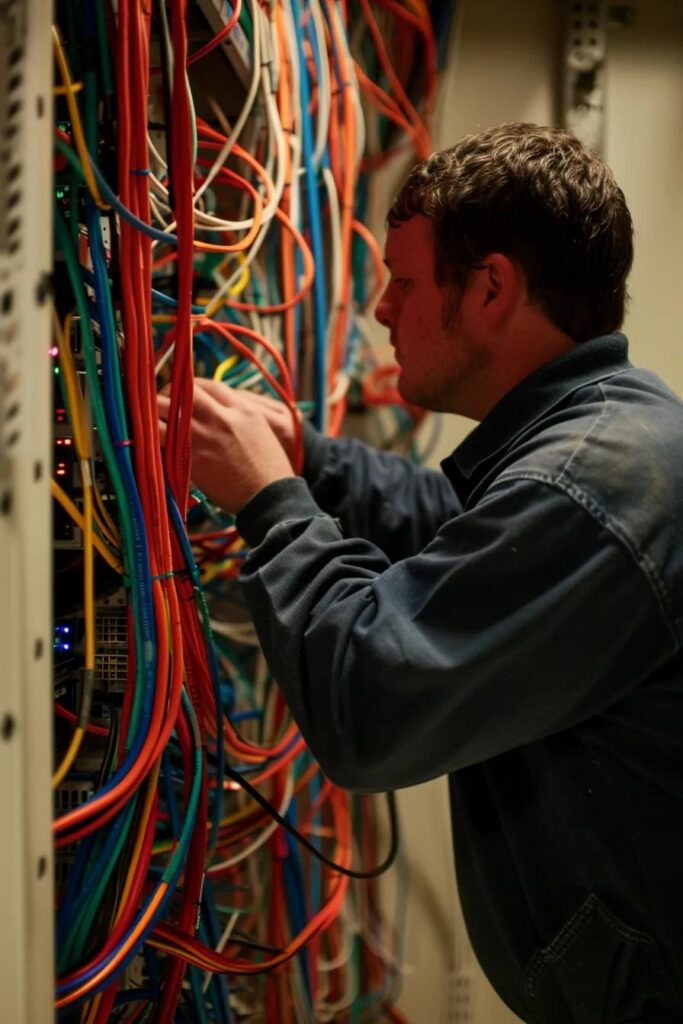
Our 90‑Day Labor Guarantee for Cabling & Electrical Services: Practical Warranty for Commercial Electrical Work and Network CablingOur 90‑day labor guarantee gives Southern California businesses a clear, fast path to fix installation problems without the back-and-forth. It covers workmanship-related failures after handoff and shortens downtime for commercial sites. This article explains what that 90‑day guarantee covers, how it works alongside manufacturer warranties, which cabling and electrical installations are typically included, and how to file a claim so remediation happens quickly. Installation errors in structured cabling or lighting and power circuits can cause costly interruptions; a labor guarantee makes the installer responsible for the fix so your operations recover faster. Below we outline covered services, the difference between labor and product warranties, the claims process, anonymized client examples, and how to request a bid that includes guaranteed workmanship. We use practical industry terms—installation workmanship guarantee, commercial cabling warranty, CAT6A, fiber optics—and clear guidance so facilities teams can evaluate guaranteed services with confidence.What Does Our 90-Day Labor Guarantee Cover for Commercial Electrical and Cabling Services?The 90‑day labor guarantee covers workmanship problems that appear within the first 90 days after project handoff. It focuses on repairing or reworking installation mistakes rather than replacing products. Typical workmanship faults include termination errors, poor routing, missing strain relief, incorrect panel labeling, and wiring mistakes that reduce system performance. Manufacturer defects remain the manufacturer’s responsibility. Under the guarantee, our technicians diagnose, repair, and retest systems to restore the performance levels specified in the contract. This approach shortens mean time to repair and aligns with commissioning and the early-life failure window commonly seen in network cabling and electrical deployments.For quick reference, this coverage usually includes the core items below.Workmanship remediation for structured cabling — terminations, punch‑downs, and similar installation work.Corrective actions for miswired lighting runs, mislabeled panels, and outlet wiring mistakes.On-site rework such as re‑terminations, connector swaps, and rerouting to meet performance specs.Those examples reflect the labor-focused scope of the warranty and lead into a concise comparison of typical cabling versus electrical remediation steps.Different service categories need different fixes. The table below summarizes common coverage and expected remediation under a 90‑day labor guarantee.Service CategoryWorkmanship CoverageTypical Remediation ActionStructured cabling (CAT5e/CAT6/CAT6A)Termination faults, continuity issues, performance below specRe‑termination, connector replacement, pair mapping, retest to standardsFiber optic installations (single/multi-mode)Splice errors, connector defects, unexpected attenuationRe‑splice, replace/polish connectors, OTDR testing and verificationCommercial electrical (lighting/outlets/dedicated circuits)Miswiring, loose connections, incorrect circuit feedsRewire outlets, correct circuit feeds, tighten/replace terminations and retestPanel labeling & documentationIncorrect or missing labels that create operational riskUpdate labels, correct schematics, deliver as‑built documentationWhich cabling services are included in the labor warranty?The labor warranty covers structured cabling workmanship for CAT5e, CAT6, CAT6A runs and fiber optic terminations when installation mistakes degrade performance. That includes bad terminations, wrong pair mappings, excessive strain on cables, undocumented reroutes, and connectors damaged during installation (not manufacturer defects). When links fail to pass the specified test results, typical remediation is re‑terminating jacks, swapping faulty connectors, rerouting to avoid interference, and repeating standards‑based testing until the runs meet contract thresholds. Knowing these cabling remedies helps procurement teams evaluate installers who stand behind their workmanship.Those cabling examples lead naturally into similar electrical remedies, where the focus is safety and circuit integrity.What electrical installations are protected under the labor guarantee?Electrical coverage usually targets installation workmanship on lighting circuits, general‑purpose outlets, dedicated equipment circuits, and power distribution tasks where poor installation causes faults. Common issues include miswired lighting runs, reversed receptacle polarity, undersized or poorly terminated conductors, and loose connections that cause intermittent outages or nuisance tripping. Remediation under the guarantee includes on‑site corrections, rewiring problem segments, replacing faulty terminations, and running safety and continuity tests to confirm compliance with project documentation. Emphasizing electrical workmanship in the initial post‑install window reduces safety risks and helps keep operations running — which is why local response capability matters.Ring and Ping Communications keeps local coverage across Southern California to support rapid remediation and straightforward communication during the guarantee period.Why Choose Ring and Ping’s Commercial Electrical Contractor Guarantee in Southern California?We offer a combined cabling and electrical workmanship guarantee tailored for commercial clients across Orange, Los Angeles, Riverside, and San Diego counties. One accountable contractor for both low‑voltage and electrical remediation reduces coordination risk when multiple trades overlap. A single team shortens escalation paths and response SLAs, especially for issues like conduit routing conflicts that affect both power and network runs. Our guarantee commits to remediating workmanship faults within 90 days and aligns with commissioning and acceptance testing performed at turnover. That single point of accountability cuts down on finger‑pointing and smooths the handoff to operations teams.Ring and Ping supports guaranteed engagements with local dispatch and combined trade expertise to speed corrective action and reduce downtime. To request a bid that includes the 90‑day labor guarantee and specific remediation terms, contact us by phone or email to schedule a site survey and get a project quote.How does our 90-day labor warranty build trust and reliability for businesses?An explicit 90‑day labor warranty turns early installation risk into a managed remediation workflow with measurable response targets and documented test results. When an installer accepts responsibility for workmanship-related fixes, facility managers gain confidence that early failures will be addressed without lengthy disputes, reducing downtime and protecting continuity. Trust grows from transparent triage: report, assess, remediate, retest. Those visible steps make vendor obligations tangible and measurable, accelerating the restoration of service levels in sensitive environments such as offices, warehouses, and clinics.Well‑defined remediation terms also enable procurement teams to embed guarantee language into contracts and acceptance criteria, tying warranty performance to payment milestones and handoff conditions.What industry-specific expertise supports our workmanship guarantee?Industry context matters because uptime and safety priorities vary by sector. Warehouses require careful cable routing around high ceilings; manufacturing facilities require robust, dedicated circuits for machinery; professional offices expect tidy labeling and certifiable structured cabling. Our guarantee addresses these sector risks with focused workmanship standards and testing protocols. For instance, precise fiber splicing matters more in high‑bandwidth backbones, while GFCI‑protected outlets are essential in wet process areas. Applied correctly,
Why Choose Cat6 Network Cabling for Optimal Performance?

Why Choose Cat6 Network Cabling for Optimal Performance?Efficient network infrastructure underpins every modern business, and Cat6 cabling delivers the speed and reliability Southern California organizations demand. When slow connections and intermittent dropouts threaten productivity, choosing Cat6 network cabling ensures robust throughput, expanded bandwidth, and superior signal integrity. In this guide, we explore key speed and throughput advantages, interference reduction features, future-proofing benefits, comparisons with Cat5e and Cat6a, industry-specific applications across Orange County to San Diego, Ring and Ping Communications’ professional installation process, and everyday business concerns about Cat6 Ethernet cable. Armed with these insights and local expertise, decision makers can confidently upgrade to a resilient, high-performance network foundation.What Are the Key Speed and Bandwidth Benefits of Cat6 Network Cabling?Cat6 network cabling provides higher frequency and data throughput than earlier Ethernet standards, enabling faster transfers and more concurrent applications. By operating at up to 250 MHz and supporting 10 Gbps speeds over 55 meters, this cabling addresses large file transfers, cloud services, and multimedia streaming without latency. These advantages translate into measurable productivity gains and improved user experiences for businesses of every size.How Does Cat6 Ethernet Cable Support 10 Gigabit Ethernet Speeds up to 55 Meters?Cat6 cable construction features tighter pair twists and improved insulation, delivering 10 Gbps throughput over runs up to 55 meters. This performance leap stems from rigorous pair-twist specifications and an enhanced conductor gauge, which reduces attenuation and enables high-speed signaling over standard patch-panel-to-workstation distances.Introduced comparisons illustrate the difference:Cable TypeBandwidth (MHz)Max Speed (Gbps)Effective Length (m)Cat5e1001100Cat62501055Cat6a50010100This comparison confirms how Cat6 bridges the gap between legacy cabling and enterprise-grade infrastructure, preparing networks for evolving demands.Why Is Higher Bandwidth (250 MHz) Important for Business Networks?Operating at 250 MHz frequency allows Cat6 Ethernet cable to carry more data streams simultaneously, which supports video conferencing, virtualization, and hosted applications without congestion. Higher bandwidth mitigates packet collisions and reduces latency under heavy loads, ensuring seamless multitasking for accounting software, VoIP calls, and real-time analytics. By increasing capacity, Cat6 Ethernet cable enhances network efficiency and user satisfaction.How Does Cat6 Improve Network Efficiency Compared to Older Cables?Compared to Cat5e and earlier standards, Cat6 reduces crosstalk and near-end interference through refined pair-twist geometry and superior insulation materials. This efficiency gain reduces retransmissions and error rates, lowers CPU overhead on network devices, and shortens data transfer times. Businesses benefit from consistently high throughput and predictable performance even as user counts and application complexity grow.How Does Cat6 Network Cabling Reduce Interference and Ensure Signal Integrity?Cat6 network cabling incorporates design features that minimize electromagnetic interference and preserve waveform fidelity, resulting in stable, error-free connectivity. Improved isolation between twisted pairs, along with optional shielding, enhances resilience to electrical noise, enabling reliable data delivery in demanding environments.What Design Features Minimize Crosstalk in Cat6 Cables?Cat6 cables use tighter twists per inch, a separating spline or core, and premium dielectric insulation to block pair-to-pair interference. Shielded options (FTP or STP) use foil or braided metal layers to protect against external noise. Together, these elements deliver significant crosstalk reduction, preserving signal clarity across the entire run.By suppressing unwanted interference at the cable level, Cat6 ensures consistent throughput and fewer packet errors—an essential factor for mission-critical applications.Why Is Reduced Interference Critical for Industrial and Office Environments?Industrial machinery, wireless transmitters, and densely populated office floors generate electrical noise that can corrupt Ethernet signals if cabling lacks robust shielding. Reduced interference ensures that automated controls, VoIP systems, and secure data transfers remain uninterrupted. For manufacturing lines and busy call centers alike, this reliability translates to minimal downtime and sustained operational efficiency.How Does Cat6 Future-Proof Your Business Network Investment?Investing in Cat6 network cabling positions businesses to meet current demands while accommodating emerging technologies, which maximizes lifespan and return on investment. By supporting modern power and wireless standards and providing backward compatibility, Cat6 cabling reduces upgrade disruption and extends the life of the infrastructure.How Does Cat6 Support Emerging Technologies Like Wi-Fi 6 and PoE?Cat6’s high throughput and low attenuation enable networks to support Wi-Fi 6 access points, delivering theoretical speeds up to 9.6 Gbps. The cable’s improved conductor gauge and thermal characteristics enable advanced Power over Ethernet (PoE Types 3 and 4), delivering up to 60–90 watts per port for devices such as IP cameras, phones, and wireless APs. This dual data-and-power capability simplifies deployments and reduces separate electrical wiring requirements.What Are the Benefits of Backward Compatibility with Cat5e Infrastructure?Cat6 connectors and patch panels use the same T568A/B wiring schemes as Cat5e, enabling seamless integration with existing cabinets and jacks. Businesses can upgrade critical backbone segments to Cat6 while maintaining peripheral Cat5e links, enabling phased rollouts that minimize operational impact and capital outlay. This compatibility speeds deployment and preserves previous investments.What Are the Differences Between Cat6, Cat5e, and Cat6a for Business Use?Choosing the right cable involves balancing performance, distance, cost, and deployment complexity. Cat5e, Cat6, and Cat6a each occupy distinct roles in structured cabling, and understanding their specifications informs strategic network design.How Does Cat6 Outperform Cat5e in Speed, Bandwidth, and Reliability?Cat6 doubles Cat5e’s bandwidth and delivers ten-fold speed improvement within 55 meters by enforcing stricter signal-to-noise requirements. Enhanced insulation and precise pair geometry yield lower error rates and fewer retransmissions. The table below details core differences:Cable TypeFrequency (MHz)Throughput (Gbps)Crosstalk ReductionIdeal ApplicationCat5e1001StandardBasic office networksCat625010 (≤55 m)HighData centers, call centersCat6a50010 (≤100 m)Very highCampus backbones, PoE+When Should Businesses Consider Upgrading to Cat6a Instead of Cat6?Cat6a cabling becomes necessary when 10 Gbps connections must span up to 100 meters or when maximum PoE power levels are required without temperature derating. Data centers, multi-building campuses, and high-density wireless deployments benefit from Cat6a’s extended performance envelope and enhanced alien-crosstalk suppression.What Are the Cost and Installation Considerations for Each Cable Type?Upgrading to Cat6 typically entails moderate material and labor costs and minimal changes to existing pathways, whereas Cat6a requires thicker cables, larger conduit space, and more careful bend-radius management. Material pricing increases by 10–20 percent for Cat6a versus Cat6, and installation labor can rise by a similar margin due to cable stiffness and handling requirements.How Does Cat6 Network Cabling Benefit Specific Industries in Southern California?Tailored cabling strategies unlock
Routine Maintenance for Commercial Surveillance Systems

Routine Maintenance for Commercial Surveillance Systems: A Practical Guide to Camera Care and Reliable SecurityRoutine maintenance for commercial surveillance systems is a scheduled program of inspections, cleaning, functional tests, firmware updates, and precise documentation that keeps cameras and recorders reliable and evidence-ready. Regular service tackles mechanical wear, environmental buildup, and software drift so footage stays usable, downtime is minimized, and compliance or insurance requirements are met. This guide explains how preventive maintenance differs from reactive repair, how to write an effective maintenance contract, recommended service routines, when to repair versus replace, and how proactive maintenance extends system life. Facility managers and security teams will find practical checklists, repair decision rules, sample contract language, and maintenance matrices tailored to offices, retail, warehouses, and mixed-use properties. Industry terms—CCTV maintenance, NVR/DVR checks, PTZ calibration, and firmware updates—are used where helpful, alongside step-by-step procedures and tables to support operational decisions and procurement.What follows is actionable guidance: a clear definition and benefits of commercial camera maintenance; a contract-development section with an EAV comparison for standard clauses; a best-practice servicing routine with a maintenance task matrix and cleaning checklist; simple rules-of-thumb and a troubleshooting triggers table for repairs; and an analysis of how preventative work reduces total cost of ownership and improves uptime. Each section includes short, field-ready lists to help teams turn policy into repeatable maintenance visits.What is Commercial Security Camera Maintenance and Why is it Important?Commercial security camera maintenance is a planned program of preventative tasks and periodic checks that keeps surveillance equipment recording usable footage, operating within expected parameters, and meeting legal or insurance obligations. The process is straightforward: inspect physical components, verify recording integrity, apply firmware updates, and log findings so that degradation is detected before it becomes an operational failure. The measurable results include fewer missed events, clearer evidence for investigations, higher uptime for critical cameras, and fewer emergency repairs. Investing in routine maintenance reduces security risk, supports the chain of custody for evidence, and often satisfies contractual or regulatory requirements for high‑priority sites.Seeing the difference between preventative and reactive approaches clarifies budgeting and risk choices. Preventive maintenance reduces the risk of sudden failures through planned interventions; reactive repair restores function after a failure, usually at a higher cost and with greater uncertainty. The following section outlines everyday preventive tasks and how their frequency varies with the environment and camera type.Understanding CCTV System Preventative Maintenance for BusinessesPreventative maintenance for CCTV systems typically includes visual inspections, lens and housing cleaning, mount and cable checks, power‑supply verification, NVR/DVR storage health checks, and firmware or configuration updates. These tasks reduce environmental stressors (e.g., dust, condensation), secure power and network links, and keep software up to date to avoid vulnerabilities and compatibility issues. Frequency depends on site conditions: clean offices may need quarterly checks, while dusty warehouses or outdoor housings exposed to salt air often require monthly servicing. A retail store with heavy foot traffic benefits from quarterly lens cleaning and monthly recording audits; an industrial yard may need more frequent housing inspections and PTZ calibration.Together, these preventive tasks reduce false positives and missed events by ensuring that every system component—lens, mount, power, cabling, and recorder—functions as an integrated unit. The following section explains how regular maintenance improves day‑to‑day performance and investigative readiness.How Regular Maintenance Enhances Surveillance System PerformanceRegular maintenance boosts surveillance performance by restoring optical clarity, stabilizing network and power delivery, verifying recording integrity, and ensuring analytics receive high‑quality video. In practice, lens cleaning and moisture removal improve contrast and identification rates; NVR maintenance prevents premature overwrites and enforces retention policies; firmware updates close security gaps. Measurable outcomes include fewer missed events, faster investigative reviews thanks to clearer images, and fewer unplanned outages that compromise coverage.For example, a site that adopted quarterly cleaning and monthly storage audits saw fewer investigation delays and shorter average recovery times after failures. Those operational gains—less time spent reconstructing incidents and higher confidence in evidence—naturally lead organizations to formalize expectations in a maintenance contract.When teams prefer external support, Ring and Ping Communications connects organizations with qualified maintenance providers and helps them request inspections or quotes, translating preventive requirements into executable service plans.How to Develop an Effective Surveillance System Maintenance Contract?A good maintenance contract defines scope, frequency, service levels, responsibilities for parts and labor, response and escalation timelines, reporting expectations, and clear exclusions. Contractual clarity turns operational goals into measurable obligations—response targets, scheduled inspection intervals, and reporting formats. The result is predictable uptime, documented evidence for audits and clear cost expectations for routine servicing and emergency repairs. Start by mapping critical cameras, defining acceptable downtime, and choosing service tiers—basic scheduled maintenance, enhanced SLA with priority response, or comprehensive managed services.Below is an Entity‑Attribute‑Value table to help facility managers compare common contract elements and suggested clause wording when evaluating vendor proposals.The following table compares typical contract components with sample provisions and recommended wording.Contract ComponentTypical ProvisionExample / Recommended WordingScope of ServicesInspection, cleaning, firmware updates, and recording audit”Scheduled inspections and basic cleaning for all cameras; monthly NVR recording integrity report and firmware verification.”Response SLATime to respond and resolve critical failures”Critical camera offline: initial response within 4 hours; temporary mitigation or resolution within 24 hours.”Parts & LaborResponsibility for replacement parts and warranty terms”Labor included for scheduled maintenance; parts covered under manufacturer warranty; out‑of‑warranty parts require prior approval and will be billed separately.”Reporting & DocumentationFrequency and format of service reports”Technician reports after each visit with a checklist, photos, and recommended actions; a monthly summary is delivered to the facility manager.”ExclusionsWhat is not included (e.g., trenching, structural work)”Excludes structural mounting modifications, major cable replacement beyond visual inspection, and third‑party network infrastructure upgrades.”This comparison helps procurement teams ask targeted questions and ensure that proposals include precise, enforceable language rather than vague promises. The following section breaks down key contract components and what to watch for in vendor agreements.Key Components of a Commercial Security Camera Servicing AgreementA servicing agreement should list included services—inspections, lens and housing cleaning, firmware and configuration checks, recording audits, PTZ calibration, and periodic reporting—so both parties share expectations. SLAs should be measurable and tiered by severity, specifying initial response times, on‑site
Comprehensive Guide to Fiber Optic Cable Installation
Commercial Fiber Optic Installation: A Practical Guide for Southern California Businesses Commercial fiber optic cable installation covers the planning, deployment, testing, and certification of optical networks that deliver high-speed, low-latency connectivity for business sites. This guide explains how fiber is built at the physical and systems levels, why companies upgrade to fiber for reliability and growth, and how professional installation delivers measurable operational gains. You’ll get clear information on fiber types (multi-mode OM1/OM3/OM4 and single-mode OS1/OS2), the installation lifecycle from site survey through certification, and practical design patterns for warehouses, hospitals, and campuses. We also highlight how to pick a commercial fiber contractor in Southern California and answer frequent questions about splicing, testing, and timelines. Throughout, terms like fiber optic installation guide, fiber optic splicing, and fiber optic testing and certification connect the technical details to procurement and local service choices. Authored by the Experts at Ring and Ping Communications, Southern California’s trusted fiber optic installation specialists. Why Fiber Optic Installation Matters for High-Speed Business Networks Fiber is the core upgrade for modern business networks because it carries data as light, giving much higher bandwidth and lower latency than copper cabling. Light travelling through a glass core reduces signal loss and avoids electromagnetic interference, producing more consistent links for mission‑critical services. The result is predictable performance for cloud apps, real‑time control systems, and large data transfers — all of which improve productivity and lower operational risk. Knowing these fundamentals helps businesses assess ROI and plan upgrades that support growth in IoT, cloud services, and analytics. The benefits below summarize how fiber changes network behavior in practical terms and why correct installation plus certification matter for long-term performance and warranty coverage. Fiber optic installation supports these core business outcomes: Higher throughput and lower latency for critical applications and large file movement. Greater reliability thanks to immunity from electromagnetic interference and improved uptime. Scalable capacity that’s often upgraded by swapping transceivers instead of re‑cabling. Those gains translate to a smoother user experience, less downtime, and simpler upgrade paths — all of which reduce total cost of ownership over time. What are the main business benefits of fiber optic cabling? Fiber gives enterprises a major step up in bandwidth, enabling multi‑gigabit and multi‑terabit aggregations across building backbones and campus networks. Because light travels through a glass core, attenuation is low and advanced modulation schemes increase effective capacity while keeping latency down for video calls, virtual desktops, and other delay‑sensitive services. Fiber also tends to have a longer mean time between failures than copper, cutting maintenance windows and helping meet SLAs. Those performance improvements justify investment through higher productivity and lower support costs. Beyond throughput, fiber improves security and flexibility. It’s harder to tap undetected and supports traffic segmentation strategies that isolate critical systems — a key consideration for regulated environments. Those operational and security advantages are central to how fiber future‑proofs your infrastructure. How does fiber installation future‑proof a commercial network? Fiber future‑proofs networks by providing headroom for growth without wholesale cable replacement. Often operators increase capacity by upgrading optics or adding wavelength‑division multiplexing rather than re‑pulling cable. That approach lowers lifetime costs and shortens upgrade cycles, letting businesses respond quickly to rising demand from AI workloads, 5G backhaul, or high‑resolution imaging. Single‑mode fiber’s long reach and durability make it ideal for campus and metro links that need to last through multiple technology generations. A well‑documented, certified installation creates a lifecycle that simplifies later upgrades and preserves warranty coverage. Planning also means designing redundancy and modular cabling zones so capacity can be increased in targeted areas with minimal disruption. That design thinking leads naturally into the next section on fiber types and their use cases. Which Types of Fiber Optic Cable Are Used in Commercial Installations? Commercial fiber comes in two main varieties — multi‑mode and single‑mode — distinguished by core diameter and how light propagates. Multi‑mode (OM1, OM3, OM4) uses a larger core for short‑to‑midrange links inside buildings and data centers. Single‑mode (OS1/OS2) has a much smaller core suited for long‑distance, high‑capacity backbones. Choosing the right type affects transceiver selection, connector standards, and future upgrade options, so technical teams should match cable specs to required link distances and target speeds. The table below compares common commercial fiber classifications to simplify selection before you dive into specific use cases. Use it to match distance, recommended connectors, and typical commercial applications. Fiber TypeCore / CharacteristicTypical Max Distance & UseOM1 (multi-mode)62.5 µm core for legacy short linksUsed for short 1 Gbps runs in older buildings and simple horizontal cabling (up to 300 meters at 1 Gbps)OM3 (multi-mode)50 µm laser‑optimized for 10 Gbps+Common in modern data centers and within‑building backbones up to ~300 meters at 10 GbpsOM4 (multi-mode)50 µm enhanced for higher bandwidthPreferred for high‑density enterprise backbones and future‑proofed 40/100 Gbps segments up to ~400 metersOS1/OS2 (single-mode)~9 µm core optimized for long haulBest for campus backbones, provider handoffs, and inter‑building links across kilometers (OS1 up to ~10 km; OS2 optimized for longer reach) How do multi‑mode fibers differ and where do you use them? Multi‑mode and single‑mode differ mainly by core diameter and modal dispersion: multi‑mode’s larger core limits distance but keeps transceiver costs lower for short links. OM3 and OM4 are laser‑optimized and support 10 Gbps and higher across typical data center and in‑building runs, making them a good fit for campus risers and horizontal cabling. Installation best practices — correct connector polishing, maintaining bend radius, and clear labeling — preserve performance during moves and changes. Many organizations install OM4 for new internal backbones while keeping OM3 for lower‑demand runs, striking a balance between performance and budget. What are the features and uses of single‑mode fiber? Single‑mode fiber (OS1/OS2) has a narrow core that supports a single propagation mode, enabling low dispersion and long‑distance links with very high bandwidth. It’s the go‑to choice for campus backbones, inter‑building runs, and service‑provider handoffs where reach and future scalability matter. While single‑mode optics and splicing can cost more up front, the long‑term benefits include simpler upgrades to higher‑speed optics and fewer
Reliable Cat6 Cabling Installation for Your Commercial Space
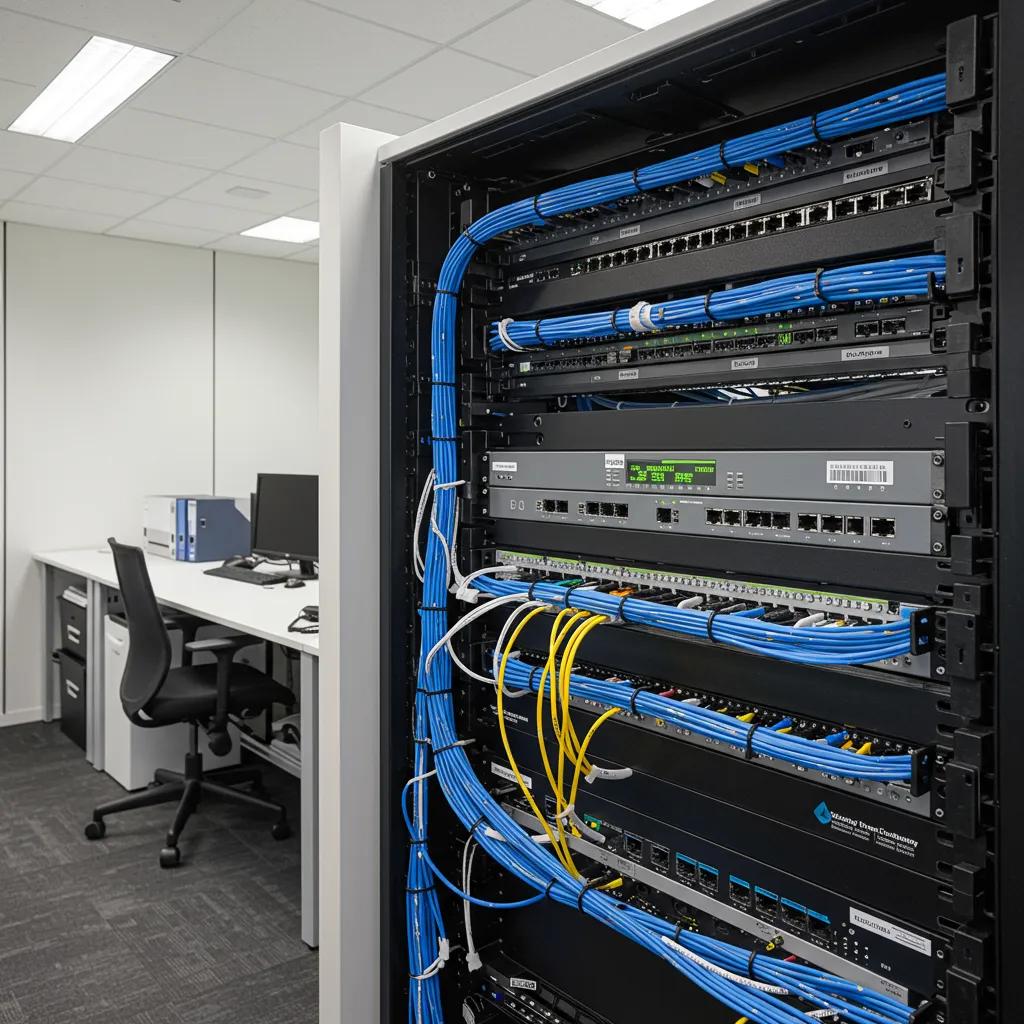
Ensure your commercial space is wired for success with reliable Cat6 cabling installation. Optimize network performance and boost productivity today!
High-Performance Network Cabling Solutions in Laguna Niguel

Elevate your connectivity with high-performance network cabling solutions in Laguna Niguel. Secure, reliable installations for your home or business await you!