Routine Maintenance for Commercial Surveillance Systems: A Practical Guide to Camera Care and Reliable Security
Routine maintenance for commercial surveillance systems is a scheduled program of inspections, cleaning, functional tests, firmware updates, and precise documentation that keeps cameras and recorders reliable and evidence-ready. Regular service tackles mechanical wear, environmental buildup, and software drift so footage stays usable, downtime is minimized, and compliance or insurance requirements are met. This guide explains how preventive maintenance differs from reactive repair, how to write an effective maintenance contract, recommended service routines, when to repair versus replace, and how proactive maintenance extends system life. Facility managers and security teams will find practical checklists, repair decision rules, sample contract language, and maintenance matrices tailored to offices, retail, warehouses, and mixed-use properties. Industry terms—CCTV maintenance, NVR/DVR checks, PTZ calibration, and firmware updates—are used where helpful, alongside step-by-step procedures and tables to support operational decisions and procurement.
What follows is actionable guidance: a clear definition and benefits of commercial camera maintenance; a contract-development section with an EAV comparison for standard clauses; a best-practice servicing routine with a maintenance task matrix and cleaning checklist; simple rules-of-thumb and a troubleshooting triggers table for repairs; and an analysis of how preventative work reduces total cost of ownership and improves uptime. Each section includes short, field-ready lists to help teams turn policy into repeatable maintenance visits.
What is Commercial Security Camera Maintenance and Why is it Important?
Commercial security camera maintenance is a planned program of preventative tasks and periodic checks that keeps surveillance equipment recording usable footage, operating within expected parameters, and meeting legal or insurance obligations. The process is straightforward: inspect physical components, verify recording integrity, apply firmware updates, and log findings so that degradation is detected before it becomes an operational failure. The measurable results include fewer missed events, clearer evidence for investigations, higher uptime for critical cameras, and fewer emergency repairs. Investing in routine maintenance reduces security risk, supports the chain of custody for evidence, and often satisfies contractual or regulatory requirements for high‑priority sites.
Seeing the difference between preventative and reactive approaches clarifies budgeting and risk choices. Preventive maintenance reduces the risk of sudden failures through planned interventions; reactive repair restores function after a failure, usually at a higher cost and with greater uncertainty. The following section outlines everyday preventive tasks and how their frequency varies with the environment and camera type.
Understanding CCTV System Preventative Maintenance for Businesses
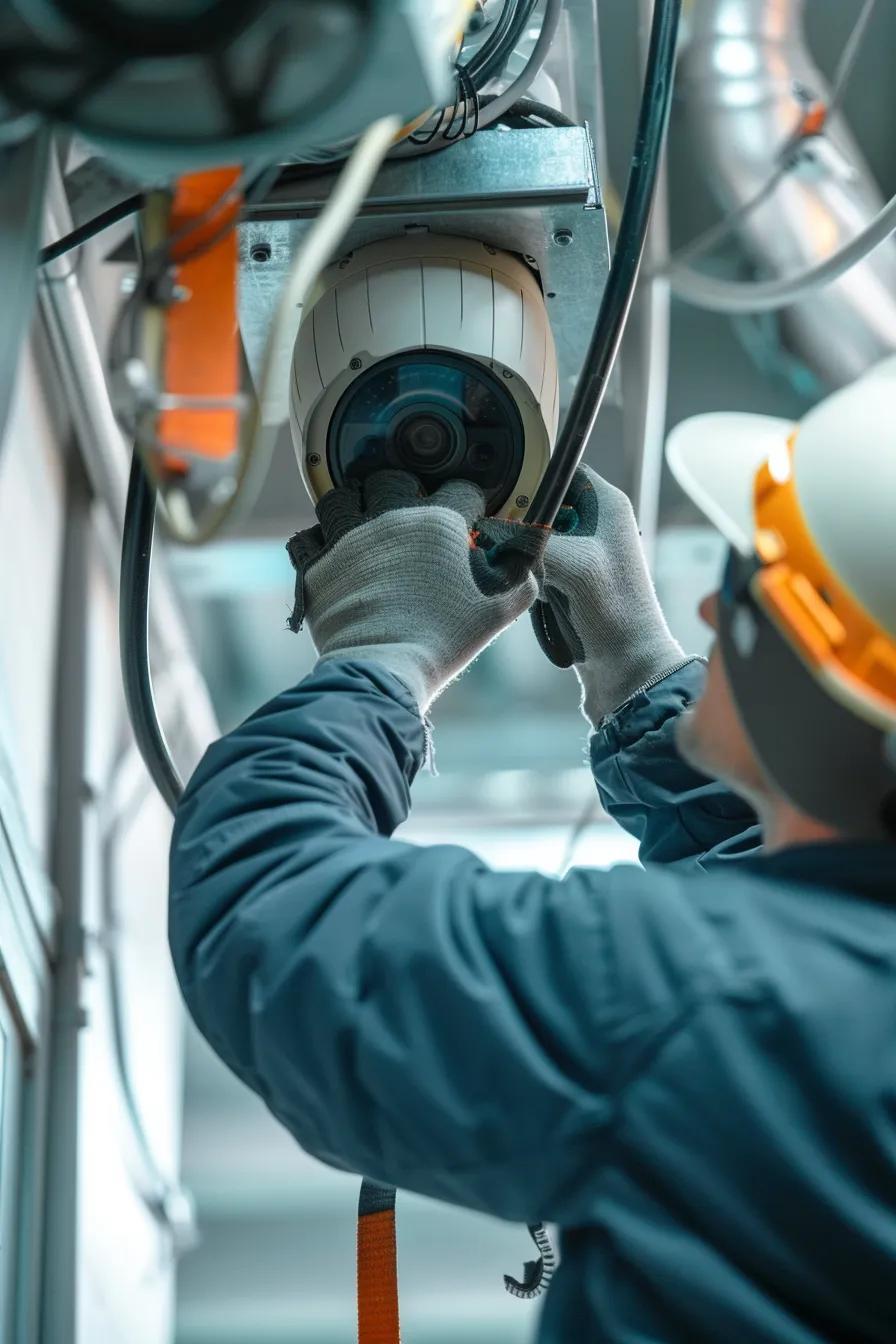
Preventative maintenance for CCTV systems typically includes visual inspections, lens and housing cleaning, mount and cable checks, power‑supply verification, NVR/DVR storage health checks, and firmware or configuration updates. These tasks reduce environmental stressors (e.g., dust, condensation), secure power and network links, and keep software up to date to avoid vulnerabilities and compatibility issues. Frequency depends on site conditions: clean offices may need quarterly checks, while dusty warehouses or outdoor housings exposed to salt air often require monthly servicing. A retail store with heavy foot traffic benefits from quarterly lens cleaning and monthly recording audits; an industrial yard may need more frequent housing inspections and PTZ calibration.
Together, these preventive tasks reduce false positives and missed events by ensuring that every system component—lens, mount, power, cabling, and recorder—functions as an integrated unit. The following section explains how regular maintenance improves day‑to‑day performance and investigative readiness.
How Regular Maintenance Enhances Surveillance System Performance
Regular maintenance boosts surveillance performance by restoring optical clarity, stabilizing network and power delivery, verifying recording integrity, and ensuring analytics receive high‑quality video. In practice, lens cleaning and moisture removal improve contrast and identification rates; NVR maintenance prevents premature overwrites and enforces retention policies; firmware updates close security gaps. Measurable outcomes include fewer missed events, faster investigative reviews thanks to clearer images, and fewer unplanned outages that compromise coverage.
For example, a site that adopted quarterly cleaning and monthly storage audits saw fewer investigation delays and shorter average recovery times after failures. Those operational gains—less time spent reconstructing incidents and higher confidence in evidence—naturally lead organizations to formalize expectations in a maintenance contract.
When teams prefer external support, Ring and Ping Communications connects organizations with qualified maintenance providers and helps them request inspections or quotes, translating preventive requirements into executable service plans.
How to Develop an Effective Surveillance System Maintenance Contract?
A good maintenance contract defines scope, frequency, service levels, responsibilities for parts and labor, response and escalation timelines, reporting expectations, and clear exclusions. Contractual clarity turns operational goals into measurable obligations—response targets, scheduled inspection intervals, and reporting formats. The result is predictable uptime, documented evidence for audits and clear cost expectations for routine servicing and emergency repairs. Start by mapping critical cameras, defining acceptable downtime, and choosing service tiers—basic scheduled maintenance, enhanced SLA with priority response, or comprehensive managed services.
Below is an Entity‑Attribute‑Value table to help facility managers compare common contract elements and suggested clause wording when evaluating vendor proposals.
The following table compares typical contract components with sample provisions and recommended wording.
| Contract Component | Typical Provision | Example / Recommended Wording |
|---|---|---|
| Scope of Services | Inspection, cleaning, firmware updates, and recording audit | “Scheduled inspections and basic cleaning for all cameras; monthly NVR recording integrity report and firmware verification.” |
| Response SLA | Time to respond and resolve critical failures | “Critical camera offline: initial response within 4 hours; temporary mitigation or resolution within 24 hours.” |
| Parts & Labor | Responsibility for replacement parts and warranty terms | “Labor included for scheduled maintenance; parts covered under manufacturer warranty; out‑of‑warranty parts require prior approval and will be billed separately.” |
| Reporting & Documentation | Frequency and format of service reports | “Technician reports after each visit with a checklist, photos, and recommended actions; a monthly summary is delivered to the facility manager.” |
| Exclusions | What is not included (e.g., trenching, structural work) | “Excludes structural mounting modifications, major cable replacement beyond visual inspection, and third‑party network infrastructure upgrades.” |
This comparison helps procurement teams ask targeted questions and ensure that proposals include precise, enforceable language rather than vague promises. The following section breaks down key contract components and what to watch for in vendor agreements.
Key Components of a Commercial Security Camera Servicing Agreement
A servicing agreement should list included services—inspections, lens and housing cleaning, firmware and configuration checks, recording audits, PTZ calibration, and periodic reporting—so both parties share expectations. SLAs should be measurable and tiered by severity, specifying initial response times, on‑site arrival windows, and target resolution times for critical versus non‑critical issues. Parts, labor, and warranty clauses must state when vendors bill for parts, how warranty claims are handled, and whether loaner units or temporary coverage will be provided during repairs.
Use clear acceptance criteria and escalation paths to avoid disputes. Define responsibilities for network cabling, mounting hardware, and third‑party devices to prevent overlap. The EAV table above converts abstract terms into concrete wording that procurement teams can use in comparisons.
Priorities to verify when evaluating proposals:
- Scope Clarity: Confirm that the agreement specifies the tasks and their frequencies.
- SLA Specifics: Require measurable response and resolution times by severity.
- Parts & Costing: Define warranty coverage, parts approval, and billing terms.
These priorities lock in predictable outcomes and form the basis for vendor performance reviews. After contract essentials are set, many organizations move to scheduled maintenance to capture operational and financial benefits.
Ring and Ping Communications can help facility teams find reputable service providers and coordinate requests for custom maintenance proposals and project bids aligned with site criticality and budget.
What are the Best Practices for Routine Commercial Security Camera Servicing?
Best practices combine systematic inspections, safety procedures, consistent cleaning methods, firmware governance, and precise documentation for audits and investigations. The mechanism is a repeatable workflow: checklist‑driven visits reduce human error, standardized cleaning protects optics, timely firmware updates maintain the cybersecurity posture, and storage audits preserve evidence. The benefits are steady operational performance, faster troubleshooting, and demonstrable compliance with organizational and insurer expectations.
The maintenance task matrix below is a practical reference that lists components, tasks, and recommended frequencies, enabling teams to plan visits and allocate resources.
This maintenance task matrix lists standard components, the task to perform, and recommended frequency or checklist items.
| Component | Task | Recommended Frequency / Checklist Item |
|---|---|---|
| Camera & Lens | Inspect housing, clean lens, check seals | Monthly for outdoor; quarterly for indoor |
| Mounting Hardware | Verify stability, tighten fasteners | Quarterly, after severe weather events |
| Cabling & Connectors | Visual inspection, verify strain relief | Quarterly; immediate if corrosion is suspected |
| Power Supply / POE | Test voltage, redundancy checks | Quarterly, record voltage readings |
| NVR/DVR Storage | Verify recording schedules, test playback | Monthly, check disk health and retention |
| Firmware & Software | Check versions, apply security patches | Quarterly or when the vendor issues critical patches |
This matrix supports predictable planning and aligns inspection items with maintenance roles. The following section gives a step‑by‑step checklist technicians and staff can follow on routine visits.
Step-by-Step Guide to Inspecting and Cleaning CCTV Cameras
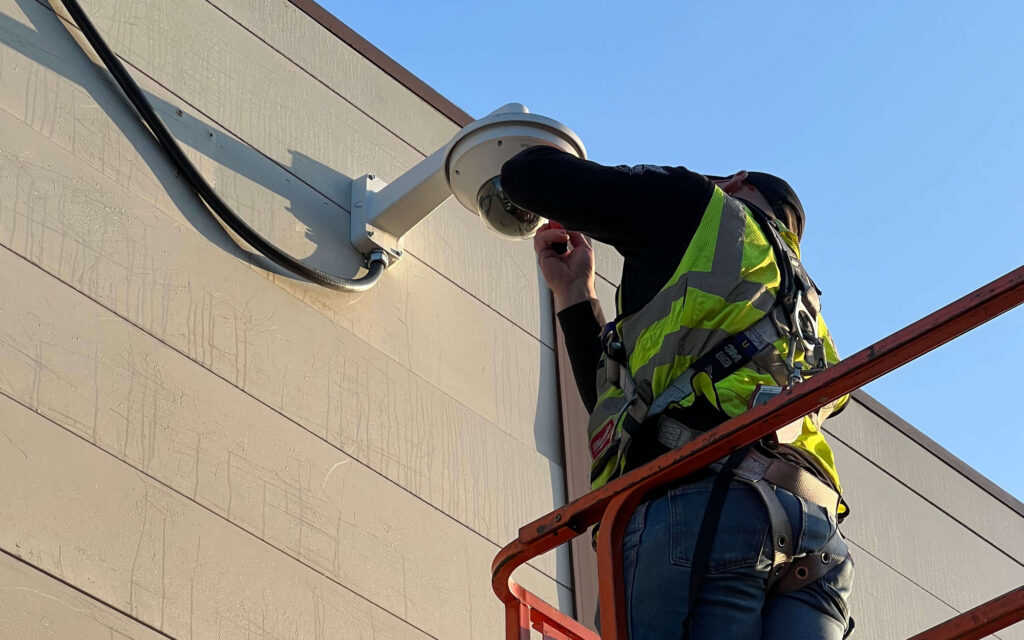
A safe, practical inspection and cleaning routine starts with a site risk assessment and any required power isolation, then proceeds to external cleaning, optical care, mechanical checks, and documentation. Begin with fall protection and electrical safety: isolate power where needed, follow lockout procedures, and use appropriate PPE. Perform a visual inspection of housings, lenses, and mounts; remove loose debris; use approved lens cleaner and microfiber to remove smudges without scratching optics. Inspect cabling for abrasion, confirm outdoor seals, test PTZ operation and calibration, and verify image quality at several zoom and focus settings.
Numbered procedural checklist:
- Safety & Power: Isolate power if needed and secure fall protection.
- Visual Inspection: Check for damage, corrosion, or loose mounts.
- Optical Cleaning: Use lens‑safe cleaner and microfiber; avoid harsh solvents on housings.
- Mechanical & Cabling Check: Tighten mounts, inspect connectors, and verify strain relief.
- Operational Test: Confirm PTZ response, recording, and playback.
After the visit, document findings with photos and technician notes, and schedule corrective work as required. A clear record improves accountability and supports warranty or insurance claims.
Quick reference during service visits:
| Component | Task | Immediate Action if an Issue is Found |
|---|---|---|
| Lens | Clean & inspect | Replace protective glass if scratched |
| Mount | Tighten/align | Schedule structural repair if loose |
| Connector | Inspect for corrosion | Replace the connector or clean the contacts |
| NVR Disk | Check SMART health | Replace the failing disk and verify backups |
How to Identify and Troubleshoot Common Surveillance System Issues
Common problems include blurry or obstructed images, cameras offline, intermittent connectivity, recording gaps, and persistent hardware errors. A fast diagnostic flow is: check power, confirm network connectivity, inspect storage health, and review recent firmware or configuration changes. For blurred images, clean the lens, test autofocus or re‑focus fixed lenses, and check for condensation inside housings. For offline cameras, verify POE, ethernet link, switch status, and whether IP or DHCP conflicts exist.
Quick troubleshooting list:
- Power checks: Verify POE voltage or local supply stability.
- Network tests: Ping camera IPs, check switch ports, and VLAN settings.
- Storage verification: Confirm NVR disk space, scheduled overwrites, and playback tests.
Record each test and its outcome to avoid duplicate work and to provide technicians with a practical context if on‑site repair is needed. Complex hardware failure, repeated firmware corruption, or physical damage should be escalated to professional technicians rather than extended field troubleshooting.
This approach prepares teams to decide when to escalate to professional repair, covered in the next section.
When and How Should Business Surveillance System Repair be Conducted?

Repair decisions are driven by impact to coverage, evidence preservation, and business continuity. Immediate repair is needed for total recording loss, outages that remove coverage of high‑risk areas, and hardware damage that can’t be mitigated. The decision flow is simple: run quick diagnostics, apply temporary mitigations where possible (re‑route coverage, enable redundancy), and call for on‑site professional repair when triage doesn’t restore function. The business value is reduced downtime, fewer blind spots during investigations, and the preservation of evidentiary integrity.
Use the troubleshooting triggers table below (symptom → likely cause → immediate action) to triage issues and know when to call a technician.
Use this troubleshooting triggers table to triage common symptoms, likely causes, and immediate actions.
| Symptom | Likely Cause | Immediate Action / When to Call Pro |
|---|---|---|
| Camera offline | POE/power loss, network switch failure | Check power and switch; call a pro if power is present but the device is unresponsive |
| Blurry image | Dirty lens, focus drift, vandalism | Clean lens and test focus; call pro if internal damage or persistent blur |
| No recording | NVR disk full or corrupted, schedule misconfiguration | Check storage and schedules; call pro for disk replacement or data recovery |
| Intermittent connectivity | Cabling faults, switch port issues | Inspect connectors; call pro if issue persists after replacing cable/port |
| Repeated hardware errors | Failing board or power supply | Document errors and schedule a professional on‑site repair |
Signs Indicating the Need for Professional Surveillance System Repair
Call a professional technician when you see prolonged recording failures, critical cameras offline past the SLA window, visible physical damage to housings or IR illuminators, persistent hardware errors after resets, or failed firmware updates that destabilize devices. These signs point to root causes beyond basic field fixes and usually require diagnostic tools and manufacturer‑grade parts. Prompt professional intervention limits data loss and prevents wider system impact that increases repair time and cost.
When these red flags appear, collect system logs, error messages and recent configuration changes to speed diagnosis. Good documentation helps technicians resolve issues faster and more accurately.
Choosing Qualified Technicians for Commercial Security Camera Repairs
Choose technicians with proven commercial surveillance experience, references from similar sites, liability insurance, and familiarity with NVR/DVR platforms and networked camera setups. Require background checks or site‑access protocols for sensitive locations, and insist on formal post‑service reports documenting parts replaced and firmware versions. Vendor vetting should include sample SLAs, escalation contacts, and transparent pricing for parts and labor.
Vendor checklist for procurement:
- Proof of commercial site experience and client references.
- Insurance certificates and a safety program overview.
- Sample SLAs and post‑service reporting templates.
Documenting these items reduces procurement risk and ensures that repairs follow the chain of custody and industry best practices. Once you’ve selected a vendor, schedule repairs to minimize disruption and align work with low‑traffic windows.
Ring and Ping Communications can help teams find qualified vendors, coordinate project bids, and set up on‑site assessments to scope repair needs.
How Does Preventive Maintenance Extend the Lifespan of Commercial Surveillance Systems?
Preventative maintenance slows progressive degradation—clean lenses reduce abrasive wear, secure mounts prevent stress failures, and proactive storage management prevents disk overuse. The effect is cumulative: routine care stops minor defects from becoming systemic failures and preserves the valuable life of components such as lenses, power supplies, and NVR storage. The direct outcomes are a lower total cost of ownership, fewer emergency replacements, and steadier readiness for critical security tasks.
Regular servicing also improves security: cleaner optics yield better evidence, firmware updates reduce exploitable vulnerabilities, and documented maintenance supports warranty and insurance claims. The following section examines the impact of reliability in more detail.
Impact of Regular Servicing on System Reliability and Security
Regular servicing reduces failure frequency, cuts false alarms caused by dirty sensors or lenses, and maintains expected detection performance for analytics. From a security standpoint, timely firmware updates limit exposure to network exploits and help keep cameras compatible with analytics systems. For example, monthly storage checks can prevent unintended overwrites of crucial footage and preserve retention policies for investigations.
Consistent servicing also supports measurable metrics: fewer unplanned outages, faster mean time to repair, and improved evidence quality during investigations. These gains strengthen operational resilience and help justify investment in preventative programs.
Cost Savings Achieved Through Proactive Maintenance Strategies
Proactive maintenance reduces long‑term costs by reducing emergency repairs, extending equipment life, and reducing the frequency of capital replacements. Scheduled service lets you plan parts, budget predictably, and pursue volume discounts rather than pay rush rates for emergency parts and labor. Keeping firmware current and documentation up to date also helps preserve warranty coverage and avoid unnecessary out‑of‑warranty expenses.
The table below compares reactive and proactive cost impacts to illustrate typical differences in outcomes and budgeting predictability.
| Approach | Typical Short-Term Cost | Typical Long-Term Impact |
|---|---|---|
| Reactive Repair | Low until failure; high emergency repair costs | Higher TCO from downtime, rushed parts, and premature replacements |
| Scheduled Preventative | Predictable recurring service expenses | Lower TCO, extended equipment life, better budgeting, and fewer emergencies |
| Managed SLA | Subscription or retainer plus scheduled work | Prioritized response, reduced downtime and documented performance |
This comparison shows how investing in preventative maintenance leads to budget stability and fewer operational disruptions. Well‑documented programs deliver both performance and financial benefits.
When your organization is ready to evaluate maintenance plans or request bids, Ring and Ping Communications serves as an information hub that connects teams with vetted vendors and facilitates inspections, quotes, and project proposals based on site criticality and priorities.
Ring and Ping Communications can assist organizations seeking inspections, maintenance proposals, or project bids to implement a preventative maintenance program aligned with operational goals and risk tolerance. We provide lead generation and information facilitation to help facilities secure qualified service providers.
Frequently Asked Questions
1. How often should commercial surveillance systems be maintained?
Maintenance frequency depends on the environment. Clean indoor offices often benefit from quarterly checks; dusty warehouses, outdoor locations, or coastal sites exposed to salt air typically require monthly servicing. Tailor the schedule to site conditions, camera types, and retention needs to maximize reliability.
2. What are the common signs that a surveillance camera needs repair?
Watch for blurry or obstructed images, cameras that are offline, intermittent connectivity, recording gaps or persistent hardware errors. Visible physical damage and prolonged recording failures are clear signals to escalate to a qualified technician.
3. What should be included in a maintenance contract for surveillance systems?
A complete contract should cover scope, frequency, SLAs, parts and labor responsibilities, reporting requirements, and exclusions. It should specify response times for critical issues, documentation formats, and handling of out‑of‑warranty parts to avoid surprises.
4. How can I ensure the quality of service from maintenance providers?
Verify provider credentials, commercial experience, and client references. Check liability insurance, safety program,s and background‑check policies for technicians. Request sample SLAs and post‑service reports so you can review the provider’s delivery and documentation standards.
5. What are the benefits of preventative maintenance for surveillance systems?
Preventative maintenance extends equipment life, reduces emergency repairs, improves uptime and preserves evidence quality. It also supports compliance with legal and insurance requirements and improves budget predictability.
6. How does firmware updating fit into the maintenance routine?
Firmware updates are essential. They close security holes, improve performance, and maintain compatibility with other devices and analytics. Include firmware checks in your maintenance schedule and apply critical patches promptly after testing.
7. What should I do if I encounter persistent issues with my surveillance system?
Document symptoms and any troubleshooting steps taken, including logs and photos. If basic checks don’t resolve the problem, escalate to a qualified repair service with that documentation to speed diagnosis and reduce on-site time.
Conclusion
Routine maintenance makes commercial surveillance systems more reliable, reduces downtime, and helps meet legal and insurance expectations. A targeted preventative program extends equipment life, improves evidence quality, and stabilizes operational costs. If you’d like help evaluating maintenance plans or finding qualified providers, contact Ring and Ping Communications to start the process and request inspections or quotes.