Commercial Fiber Optic Installation: A Practical Guide for Southern California Businesses
Commercial fiber optic cable installation covers the planning, deployment, testing, and certification of optical networks that deliver high-speed, low-latency connectivity for business sites. This guide explains how fiber is built at the physical and systems levels, why companies upgrade to fiber for reliability and growth, and how professional installation delivers measurable operational gains. You’ll get clear information on fiber types (multi-mode OM1/OM3/OM4 and single-mode OS1/OS2), the installation lifecycle from site survey through certification, and practical design patterns for warehouses, hospitals, and campuses. We also highlight how to pick a commercial fiber contractor in Southern California and answer frequent questions about splicing, testing, and timelines. Throughout, terms like fiber optic installation guide, fiber optic splicing, and fiber optic testing and certification connect the technical details to procurement and local service choices.
Authored by the Experts at Ring and Ping Communications, Southern California’s trusted fiber optic installation specialists.
Why Fiber Optic Installation Matters for High-Speed Business Networks
Fiber is the core upgrade for modern business networks because it carries data as light, giving much higher bandwidth and lower latency than copper cabling. Light travelling through a glass core reduces signal loss and avoids electromagnetic interference, producing more consistent links for mission‑critical services. The result is predictable performance for cloud apps, real‑time control systems, and large data transfers — all of which improve productivity and lower operational risk. Knowing these fundamentals helps businesses assess ROI and plan upgrades that support growth in IoT, cloud services, and analytics.
The benefits below summarize how fiber changes network behavior in practical terms and why correct installation plus certification matter for long-term performance and warranty coverage.
Fiber optic installation supports these core business outcomes:
Those gains translate to a smoother user experience, less downtime, and simpler upgrade paths — all of which reduce total cost of ownership over time.
What are the main business benefits of fiber optic cabling?
Fiber gives enterprises a major step up in bandwidth, enabling multi‑gigabit and multi‑terabit aggregations across building backbones and campus networks. Because light travels through a glass core, attenuation is low and advanced modulation schemes increase effective capacity while keeping latency down for video calls, virtual desktops, and other delay‑sensitive services. Fiber also tends to have a longer mean time between failures than copper, cutting maintenance windows and helping meet SLAs. Those performance improvements justify investment through higher productivity and lower support costs.
Beyond throughput, fiber improves security and flexibility. It’s harder to tap undetected and supports traffic segmentation strategies that isolate critical systems — a key consideration for regulated environments. Those operational and security advantages are central to how fiber future‑proofs your infrastructure.
How does fiber installation future‑proof a commercial network?
Fiber future‑proofs networks by providing headroom for growth without wholesale cable replacement. Often operators increase capacity by upgrading optics or adding wavelength‑division multiplexing rather than re‑pulling cable. That approach lowers lifetime costs and shortens upgrade cycles, letting businesses respond quickly to rising demand from AI workloads, 5G backhaul, or high‑resolution imaging. Single‑mode fiber’s long reach and durability make it ideal for campus and metro links that need to last through multiple technology generations. A well‑documented, certified installation creates a lifecycle that simplifies later upgrades and preserves warranty coverage.
Planning also means designing redundancy and modular cabling zones so capacity can be increased in targeted areas with minimal disruption. That design thinking leads naturally into the next section on fiber types and their use cases.
Which Types of Fiber Optic Cable Are Used in Commercial Installations?
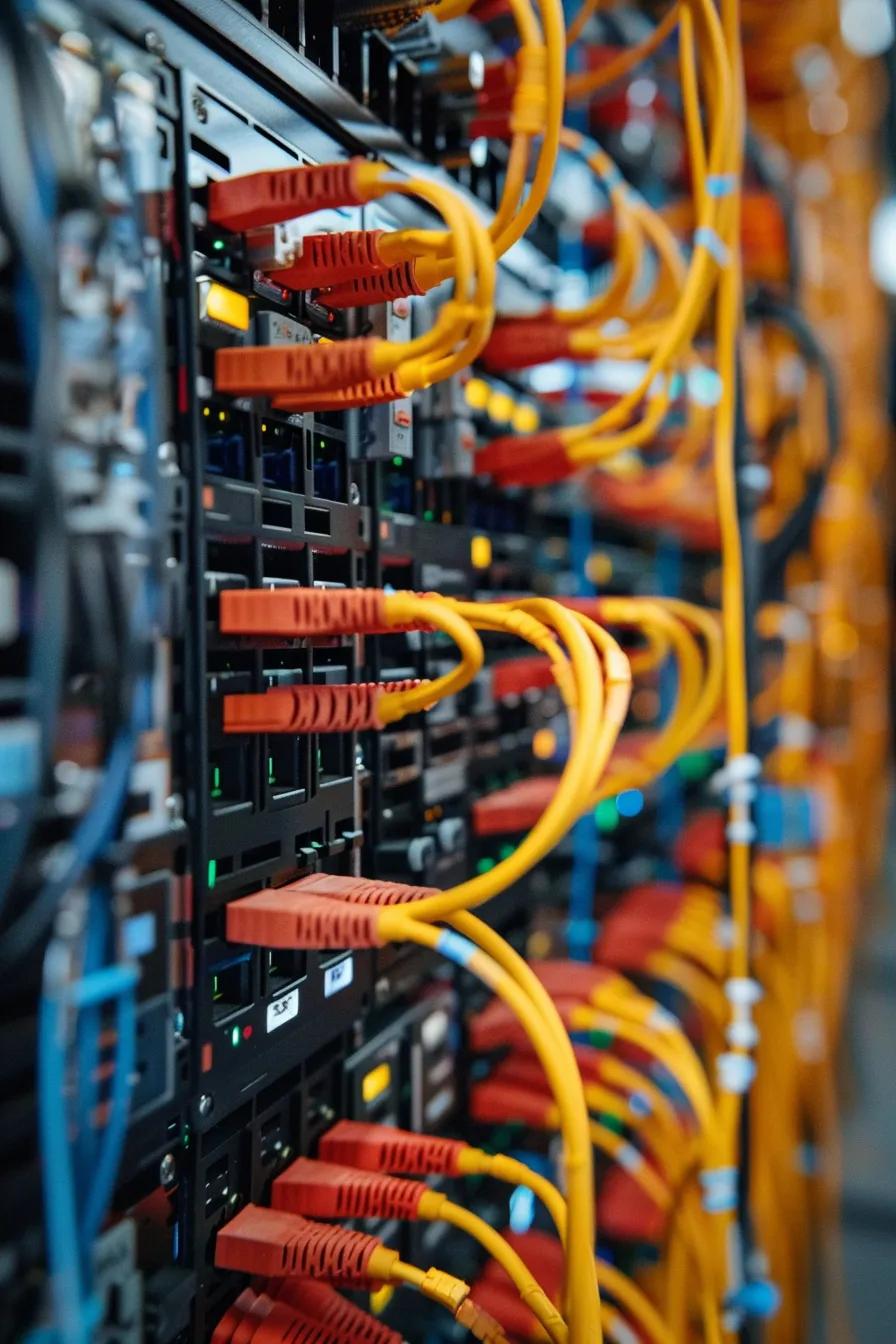
Commercial fiber comes in two main varieties — multi‑mode and single‑mode — distinguished by core diameter and how light propagates. Multi‑mode (OM1, OM3, OM4) uses a larger core for short‑to‑midrange links inside buildings and data centers. Single‑mode (OS1/OS2) has a much smaller core suited for long‑distance, high‑capacity backbones. Choosing the right type affects transceiver selection, connector standards, and future upgrade options, so technical teams should match cable specs to required link distances and target speeds.
The table below compares common commercial fiber classifications to simplify selection before you dive into specific use cases. Use it to match distance, recommended connectors, and typical commercial applications.
| Fiber Type | Core / Characteristic | Typical Max Distance & Use |
|---|---|---|
| OM1 (multi-mode) | 62.5 µm core for legacy short links | Used for short 1 Gbps runs in older buildings and simple horizontal cabling (up to 300 meters at 1 Gbps) |
| OM3 (multi-mode) | 50 µm laser‑optimized for 10 Gbps+ | Common in modern data centers and within‑building backbones up to ~300 meters at 10 Gbps |
| OM4 (multi-mode) | 50 µm enhanced for higher bandwidth | Preferred for high‑density enterprise backbones and future‑proofed 40/100 Gbps segments up to ~400 meters |
| OS1/OS2 (single-mode) | ~9 µm core optimized for long haul | Best for campus backbones, provider handoffs, and inter‑building links across kilometers (OS1 up to ~10 km; OS2 optimized for longer reach) |
How do multi‑mode fibers differ and where do you use them?
Multi‑mode and single‑mode differ mainly by core diameter and modal dispersion: multi‑mode’s larger core limits distance but keeps transceiver costs lower for short links. OM3 and OM4 are laser‑optimized and support 10 Gbps and higher across typical data center and in‑building runs, making them a good fit for campus risers and horizontal cabling. Installation best practices — correct connector polishing, maintaining bend radius, and clear labeling — preserve performance during moves and changes.
Many organizations install OM4 for new internal backbones while keeping OM3 for lower‑demand runs, striking a balance between performance and budget.
What are the features and uses of single‑mode fiber?
Single‑mode fiber (OS1/OS2) has a narrow core that supports a single propagation mode, enabling low dispersion and long‑distance links with very high bandwidth. It’s the go‑to choice for campus backbones, inter‑building runs, and service‑provider handoffs where reach and future scalability matter. While single‑mode optics and splicing can cost more up front, the long‑term benefits include simpler upgrades to higher‑speed optics and fewer intermediate active devices. Choosing single‑mode early avoids expensive re‑cabling when needs outgrow building‑level solutions.
Because single‑mode supports wavelength‑division multiplexing and long‑reach transceivers, it’s commonly specified for new commercial backbones meant to last through several technology cycles.
What Are the Step‑by‑Step Phases of a Professional Fiber Installation?
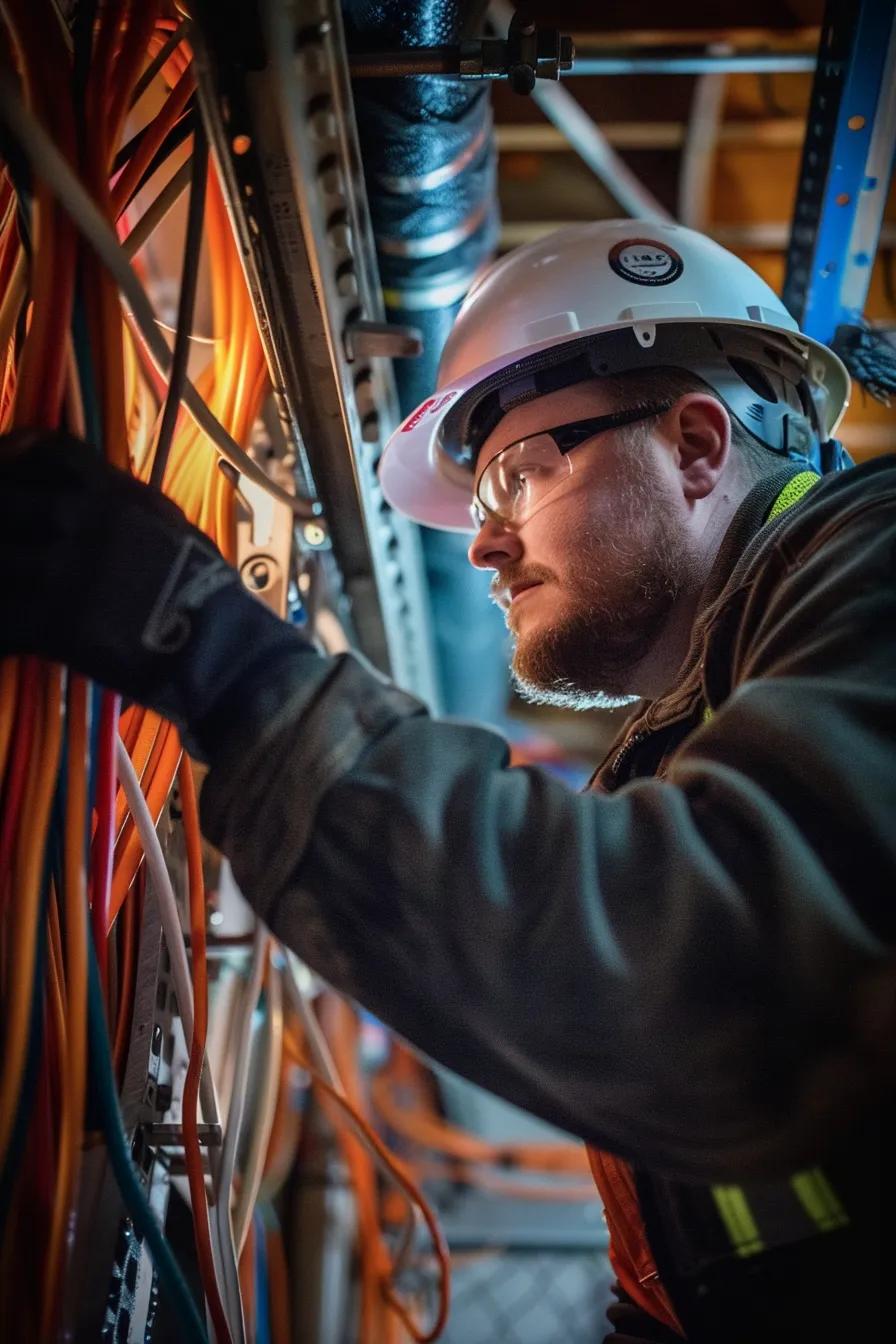
A professional fiber project follows a clear lifecycle: consultation and site assessment, design and materials selection, physical deployment, splicing and termination, testing and certification, and final documentation and handover. Each phase produces tangible deliverables — site surveys, engineered drawings, cable pulls, fusion splice records, OTDR traces, and as‑built documentation — that together ensure the network meets performance goals and warranty requirements. This staged approach reduces risk and creates verifiable acceptance criteria for buyers.
Below is a concise checklist that summarizes the typical installation sequence and the objective of each phase for quick reference.
This structured workflow reduces surprises and sets clear expectations for timelines, costs, and acceptance testing covered in the sections that follow.
How does consultation and site assessment shape the installation plan?
A proper consultation and site survey pinpoint physical routes, existing conduit capacity, environmental constraints, and the client’s bandwidth and redundancy needs—the facts that drive design decisions. Survey deliverables include floor plans, riser diagrams, and a preliminary bill of materials, which define the scope for accurate quoting and scheduling. Local factors—building access, permitting requirements, and staging windows—also influence sequencing and resource allocation. A thorough survey reduces rework and clarifies acceptance criteria ahead of deployment.
Ring and Ping Communications uses a consultative process that begins with a detailed site survey and culminates in a formal project bid and engineered drawing package. After the assessment, businesses can request a tailored project bid for certified installation options specific to Southern California sites.
What are the key stages of deployment, splicing, termination, and testing?
Deployment begins with route prep and conduit work while respecting minimum bend radii and providing slack loops and clear labeling for future maintenance. Fusion splicing is the standard for permanent, low‑loss joints; mechanical splices are used for temporary or constrained situations. Design documents set acceptable splice‑loss metrics, which testing verifies. Termination uses common connectors (LC, SC) and organized patch panels. Testing combines OTDR traces and insertion‑loss measurements to validate the fiber plant against loss budgets; passed test reports enable certification and activate warranty coverage.
Adhering to these procedures ensures the delivered network meets specifications, and documented OTDR and certification reports give objective evidence required for acceptance and ongoing maintenance.
| Installation Phase | Deliverable | Typical Timeline |
|---|---|---|
| Consultation | Site survey, scope document, preliminary quote | 1–2 weeks |
| Design | Engineered drawings, BOM, acceptance criteria | 1–3 weeks |
| Deployment | Cable pulling, conduit work, rack installation | Days to weeks (size-dependent) |
| Splicing & Termination | Fusion splice reports, terminated patch panels | 1–5 days |
| Testing & Certification | OTDR traces, insertion loss, certification report | 1–3 days |
| Handover | As-built documentation, warranty activation | 1–2 days |
How Are Fiber Solutions Tailored for Southern California Industries?
We tailor fiber solutions by mapping each industry’s priorities — coverage, redundancy, security, or compliance — to specific architectures, fiber types, and testing regimes. Warehouses often need robust horizontal runs and redundant routing for automation, while hospitals require segmented, low‑latency imaging backbones and strict documentation for critical systems. Custom choices include OM4 or OS1/OS2 backbones, redundant ring topologies for uptime, and armored or protected conduit where physical risk exists. Tailoring designs this way maximizes uptime and aligns the install with each industry’s operational requirements.
The table below outlines common industry priorities and recommended fiber solutions to guide early design conversations before engaging vendors.
| Industry | Priority Attribute | Recommended Fiber Solution |
|---|---|---|
| Warehouse / Manufacturing | Coverage and robustness | OM4 backbone with protected conduits and ring redundancy |
| Healthcare | Reliability and secure segmentation | OS1/OS2 backbone with segmented VLANs and redundant links |
| Office / Professional Services | Scalability and cost-efficiency | Mixed OM3/OM4 internal cabling with OS1/OS2 for inter-building links |
These mappings are starting points for design discussions and help stakeholders decide where to invest in higher specification or redundancy.
After reviewing these industry approaches, Southern California businesses can request a tailored project bid that reflects site constraints and operational priorities. Ring and Ping Communications provides certified commercial fiber installations, splicing, and local project bids, applying regional expertise to translate recommended solutions into executable projects.
What benefits do warehouses and manufacturing plants get from fiber?
Warehouses and manufacturing sites gain reliable, low‑latency connectivity that supports automation, real‑time inventory, and high‑density scanning or video analytics. Fiber backbones reduce network contention and enable deterministic networking for PLCs and control systems, increasing throughput and cutting downtime during peak operations. Physical protection and redundant ring topologies remove single points of failure across large floor plates, while clear labeling and accessible slack loops speed troubleshooting. Those capabilities deliver measurable gains in uptime and operational efficiency.
Designers commonly specify OM4 for in‑facility aggregation and OS1/OS2 for inter‑site backbones to ensure performance and scalability without re‑cabling.
How do hospitals use fiber for mission‑critical data?
Hospitals rely on fiber for high‑availability systems like electronic health records, PACS imaging, telemedicine, and real‑time monitoring, where latency and data integrity matter. Fiber’s low attenuation and high bandwidth let large imaging files move quickly and ensure uninterrupted access to centralized records, while logical segmentation and protected pathways isolate patient‑critical traffic. Redundant topologies and rigorous OTDR certification support the high‑availability SLAs hospitals require, and thorough documentation helps with audits and future expansions. These choices reduce clinical risk and support advanced healthcare services.
Hospitals frequently specify single‑mode backbones and hardened routing to deliver predictable performance for imaging and life‑critical systems.
How to Choose the Right Fiber Optic Installation Contractor in Southern California
Picking the right contractor comes down to technical skill, documented testing and certification practices, warranty and labor guarantees, local experience, and the ability to produce detailed bids and as‑built records. Use a practical checklist to compare proposals beyond price — focusing on acceptance testing, technician qualifications, and warranty terms — so the installed fiber meets performance expectations and you have reliable vendor support if issues arise.
Comparing proposals against this checklist cuts procurement risk and highlights vendors who deliver documented, test‑backed installations rather than best‑effort work.
What expertise and guarantees should businesses expect from an installer?
Expect installers to provide documented technician competency, calibrated testing equipment, and standardized procedures for splicing, termination, and certification. Key guarantees include labor warranties for workmanship and manufacturer warranties for certified components; these are often contingent on passing acceptance tests shown in OTDR and insertion‑loss reports. Request sample test reports, as‑built drawings, and a clear escalation process for post‑install support — these items protect the buyer and provide objective criteria for comparing bids.
How can businesses request accurate bids and consultations?
To obtain accurate bids, provide installers with clear scope details: endpoint locations, existing conduit maps, required uptime and redundancy levels, and any constraints such as vertical runs or restricted access windows. Include target performance metrics and desired handover documentation to ensure proposals align with your acceptance criteria. A complete proposal should include a site survey, engineered drawings, BOM, schedule, and testing plan. When reviewing responses, weigh testing coverage, warranty terms, and the clarity of as‑built documentation alongside price.
Provide consistent information to each bidder and allow a reasonable response window to simplify comparisons and pick the installer who balances technical rigor with fair commercial terms.
Frequently Asked Questions About Fiber Optic Installation for Businesses
Businesses typically ask about splicing, timelines, cost drivers, and how testing proves performance. Short, practical answers help decision‑makers set realistic expectations and move from planning to procurement. The FAQ below addresses common questions with concise, actionable responses.
What is fiber optic splicing and why does it matter?
Fiber splicing joins two fiber ends to create a continuous optical path. Fusion splicing melts fiber ends together to create a permanent, low‑loss joint and is the industry standard for commercial installations. Mechanical splices align fibers in a sleeve or gel and are used for temporary or constrained situations. Splice quality affects insertion loss and reflectance, which impacts link margin and long‑term reliability. Certified fusion splicing, plus documented splice‑loss reports, is typically required for acceptance testing and warranty activation.
Good splicing reduces troubleshooting and preserves the link’s loss budget, which is essential for meeting SLAs.
How long does a commercial fiber installation take?
Timelines depend on project scope: a small office install can take a few days to a week, including testing; a warehouse retrofit often runs one to three weeks, depending on routing complexity; larger campus or multi‑building projects can span weeks to months because of design, permitting, and staged cutovers. Factors that lengthen schedules include conduit availability, complex vertical or aerial routes, permit cycles, and maintenance windows needed to avoid disruption. Thorough site surveys and a clear scope shorten procurement cycles and provide realistic schedules.
Early planning and a detailed proposal keep commercial fiber projects on track.
Frequently Asked Questions
What factors should businesses consider when selecting fiber optic cable types?
Consider distance requirements, bandwidth targets, and the applications the link must support. Multi‑mode fibers are suitable for shorter, high‑speed links within buildings; single‑mode is better for long‑distance connections. Also weigh future scalability, installation cost, and upgrade paths. Understanding core diameter and modal dispersion helps match the right fiber type to your operational goals and budget.
How does the installation environment impact fiber performance?
Environment matters: temperature, humidity, and physical obstructions can affect fiber performance. Extreme temperatures can slightly change attenuation; high humidity can cause condensation issues in poorly sealed enclosures. Physical barriers, such as walls or narrow conduits, affect routing and effective link length. Planning and proper installation — maintaining bend radii and using protective conduit — mitigate environmental risks and keep performance predictable.
What are common challenges during fiber installation?
Common challenges include navigating complex building layouts, complying with local codes, and integrating with existing infrastructure. Limited access, unexpected barriers, and precise splicing requirements increase complexity. Coordinating schedules with other trades and keeping timelines aligned can also be difficult. Thorough surveys and clear stakeholder communication are key to overcoming these hurdles and delivering the expected performance.
What maintenance practices are recommended for fiber networks?
Regular maintenance includes visual inspections, periodic testing, and keeping documentation current. Technicians should check for physical damage, verify labeling, and confirm bend radius. OTDR tests help find splice loss or attenuation issues before they become failures. Maintain accurate records of maintenance and configuration changes to simplify troubleshooting and protect warranty coverage.
How can businesses ensure regulatory compliance during installation?
Follow industry standards (TIA, IEEE) and engage contractors experienced with local codes and permitting. Keep thorough documentation of the installation — including test results and as‑built drawings — to demonstrate compliance during audits. Choosing a contractor familiar with regional requirements reduces permit delays and compliance risk.
What role does testing play in the installation process?
Testing verifies the network meets performance specifications and is free of defects. OTDR testing evaluates splice loss and link continuity, while insertion‑loss measurements confirm the link remains within the loss budget. Complete test documentation not only validates the installation but also triggers warranty coverage and provides essential records for future maintenance and troubleshooting.
About Ring and Ping Communications: Your Southern California Fiber Experts
Ring and Ping Communications is a leading provider of commercial fiber optic installation, network cabling, and IT infrastructure services across Southern California. With years of experience serving diverse industries from warehouses to healthcare facilities, our certified technicians deliver reliable, high-performance network solutions tailored to your business needs. We specialize in end-to-end project management, from initial site surveys and custom design to professional deployment, fusion splicing, rigorous testing, and comprehensive documentation. Our commitment to quality ensures your fiber optic network is future-proof, compliant, and optimized for maximum uptime and operational efficiency.
Learn more about our services and how we can support your business connectivity needs:
Conclusion
Upgrading to commercial fiber-optic cabling delivers clear benefits: increased bandwidth, improved reliability, and a path to future scalability. This guide provides practical insights into fiber types, installation phases, and industry use cases to help you make informed decisions. When you’re ready, request a tailored project bid that reflects your site constraints and operational goals. Explore our services to keep your business connected, resilient, and competitive in a fast‑moving digital landscape.