Commercial Cabling Services in Anaheim, CA: Expert Solutions for Reliable Business Networks
Commercial cabling in Anaheim, CA is the physical backbone that links voice, data, and video across your sites — and done right, it keeps systems predictable and downtime low. Below, we walk through structured cabling and low-voltage wiring, compare common cable types, and explain why professional installation and certification are critical to uptime and growth. You’ll get practical guidance on choosing between CAT5e, CAT6, CAT6A, and fiber optic options, learn how low-voltage wiring supports security and access control, and see which local industries have special requirements. Along the way, we map the installation and certification process, highlight quality controls, and answer the buyer’s questions to help you plan projects with confidence.
What Are Commercial Cabling Services and Why Are They Essential for Anaheim Businesses?
Commercial cabling covers the design, installation, testing, and certification of structured cabling and low-voltage systems that carry voice, data, and video through a building or campus. These systems use standardized pathways — patch panels, jack ports, racks, and conduits — to cut faults and make moves, adds, and changes predictable. For Anaheim businesses, the payoff is reliable connectivity that supports VoIP, cloud apps, POS, CCTV, and access control while reducing costly downtime. Local conditions such as building size, exposure to noise or interference, and regulatory requirements shape the cabling choices that deliver the best mix of performance and future scalability for your site.
Following established standards is the most effective way to protect long-term network reliability and performance.
Structured cabling lets multiple services share a single, managed infrastructure. That standardization cuts troubleshooting time and improves uptime by avoiding ad‑hoc runs that introduce single points of failure. For example, a call center running VoIP and conferencing benefits from consistent pair mapping and labeled pathways—technicians can respond faster and resolve issues without reworking entire runs. Knowing these operational benefits helps you pick cable types and topologies that balance speed, distance, and budget for each facility.
If you’re ready to move from planning to procurement, the next step is simple: request a site survey or bid so we can provide a clear proposal and fixed pricing.
How Does Structured Cabling Support Voice, Data, and Video Communications?
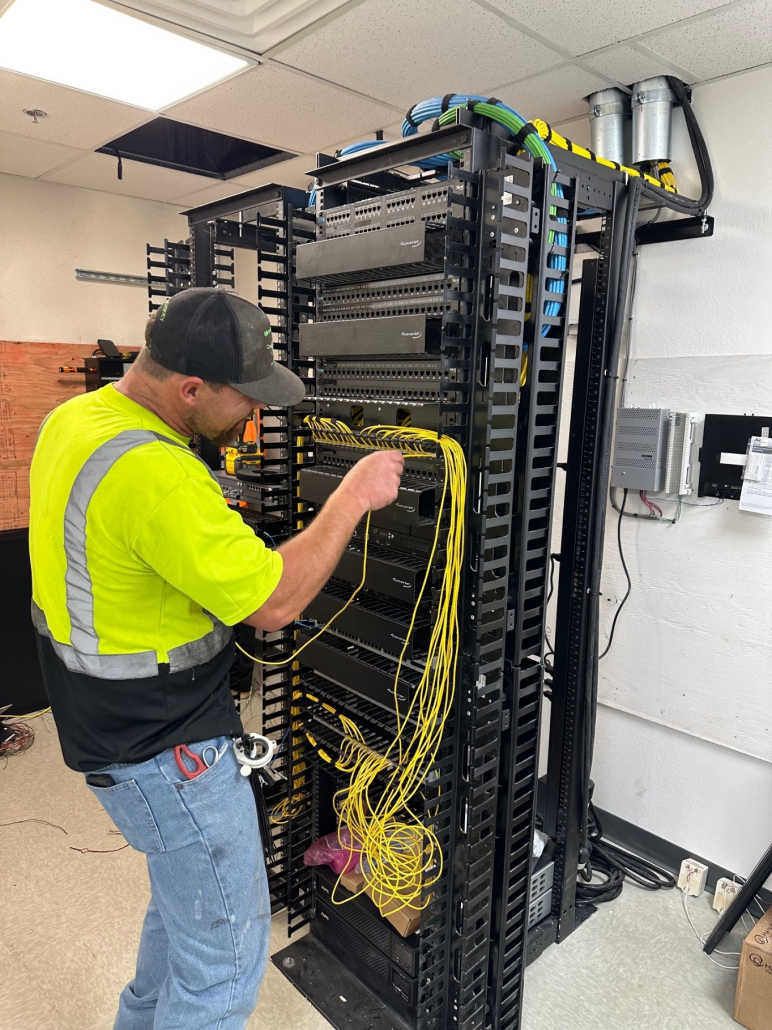
Structured cabling breaks a network into subsystems — horizontal cabling, backbone cabling, equipment rooms, and work area components — so voice, data, and video run over a single, managed architecture. Standardized termination points, such as patch panels and jack ports, deliver consistent signal performance for VoIP phones, Ethernet, and IP cameras. That structure reduces crosstalk, speeds upgrades, and makes it easy to trace and replace segments without redoing whole runs. For instance, a medical office can run phones and cameras on the same physical system while keeping traffic separate with VLANs to maintain privacy and performance.
What Makes Ring and Ping Communications a Trusted Provider in Orange County?
We provide local execution with industry-focused guarantees across Southern California. Our certified techs back installations with a 90‑day labor guarantee and a lifetime manufacturer’s warranty on certified cabling, and we offer same‑day or next‑day service when you need it. Accredited by the BBB and listed in The Blue Book, Ring and Ping works across warehousing, manufacturing, healthcare, call centers, legal, and finance — so our crews understand regulated environments and high-density facilities. Those trust signals expedite procurement and provide owners with the assurance they need when planning network wiring upgrades.
Which Types of Commercial Cabling Solutions Are Available in Anaheim?
Typical commercial cabling options here include twisted‑pair copper (CAT5e, CAT6, CAT6A) and fiber (multi‑mode and single‑mode). Copper is cost‑effective for horizontal runs and PoE devices; fiber is the right choice for backbones and long links that require high bandwidth and EMI immunity. Selecting the right mix depends on current bandwidth, projected growth, and site constraints such as interference or campus distances. The table below summarizes common characteristics and recommended use cases for each cable type in commercial settings.
| Long-haul campus backbone and carrier handoffs | Typical Capacity & Distance | Best-Use Commercial Scenario |
|---|---|---|
| CAT5e | Up to 1 Gbps for 100 meters | General office workstations and VoIP phones |
| CAT6 | Up to 10 Gbps for distances up to 55 meters; 1 Gbps up to 100 meters | Dense office floors, conferencing, and moderate PoE loads |
| CAT6A | Up to 10 Gbps for 100 meters | High-density deployments and warehouses requiring future-proofing |
| Multi-mode Fiber | 10 Gbps+ for short to medium distances (up to 550 meters at 10 Gbps) | Data center links and inter-building campus connections |
| Single-mode Fiber | 10 Gbps+ across long distances (several kilometers) | Long haul campus backbone and carrier handoffs |
This quick comparison helps decision-makers match performance needs to physical cabling choices. Choosing cables that meet current requirements and expected growth reduces lifecycle costs and supports scalable network design.
What Are the Advantages of Structured Cabling Systems Like CAT5e, CAT6, and CAT6A?
Copper systems differ primarily in bandwidth, shielding, and crosstalk resistance — factors that affect performance and price. CAT5e covers basic gigabit needs affordably. CAT6 gives more headroom and better alien crosstalk performance for denser deployments. CAT6A maintains full 10 Gbps across standard horizontal runs and is a smart choice where future-proofing matters (call centers, industrial control networks). CAT5e still makes sense in low‑demand office areas. Understanding these tradeoffs helps you plan phased upgrades with minimal disruption.
Growing demand for higher-performance cabling, such as CAT6A — driven by IoT and PoE devices — makes both cable quality and careful installation more important than ever.
How Does Fiber Optic Installation Enhance Network Speed and Reliability?
Fiber increases bandwidth and extends reliable link distances while resisting electromagnetic interference and ground loops. Use single‑mode fiber for long-reach campus backbones and carrier handoffs; multi‑mode fiber is ideal for data center and short-reach campus runs where high throughput is required. Proper installation focuses on splice quality, connector selection, and thorough testing — splice records and loss measurements document link performance. For businesses that need high availability and room to grow, adding fiber to the backbone or to server-room links noticeably improves overall network reliability.
Fiber remains a core technology for modern infrastructure — data centers and telecom networks depend on it for high-speed, reliable transmission.
How Do Low Voltage Cabling and Network Wiring Improve Commercial Infrastructure in Anaheim?
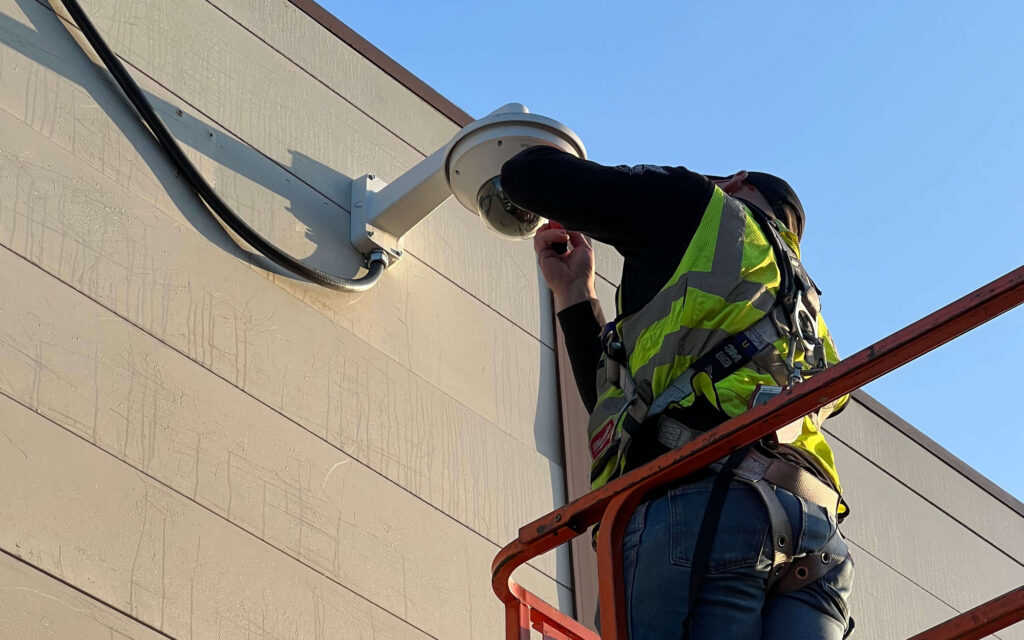
Low-voltage cabling supports devices that don’t use mains power—security cameras, access control, intercoms, and AV—and integrates them into the network for centralized monitoring. Successful implementations rely on planned pathways, PoE-capable switches, and correctly sized conduit to protect signal integrity and device uptime. When low-voltage wiring is planned alongside data cabling, businesses gain centralized device management, simpler maintenance, and fewer security blind spots. Local planning should account for routing through mechanical spaces and keeping access for future changes without disrupting operations.
Low-voltage systems also enable you to consolidate sensors, card readers, and cameras into a single monitored fabric, simplifying event correlation and auditing. That consolidation reduces vendor complexity and shortens mean time to repair because technicians can isolate problems within a single structured system. Properly designed topologies also enable phased scaling as needs evolve.
What Are the Benefits of Low Voltage Wiring for Security and Access Control Systems?

Low-voltage wiring gives stable power and data to CCTV, card readers, alarms, and IoT security devices, enabling consistent monitoring and fast fault isolation. Using labeled pathways and patching into monitored racks reduces device downtime and speeds troubleshooting. For example, a clinic can rely on low-voltage wiring to keep secure access logs and camera feeds while maintaining cleanliness and uptime. These wiring practices also simplify future expansions by preserving conduit capacity and documenting cable routes.
How Does Voice and Data Cabling Support Business Communication Needs?
Voice and data cabling deliver predictable latency, bandwidth, and power for VoIP phones, video conferencing, and enterprise Wi‑Fi APs. Quality of Service planning and network segmentation keep voice clear and video stable. Power-over-Ethernet (PoE) enables cameras and APs to run on the same twisted-pair cable used for data, simplifying installations and reducing the need for separate power circuits. Best practices include routing away from electrical noise, labeling endpoints for fast identification, and provisioning enough switch ports and VLANs to separate traffic — all steps that reduce jitter and packet loss in real-time services.
Which Industries in Anaheim Benefit Most from Specialized Commercial Cabling Services?
Different sectors in Anaheim have distinct priorities that drive cabling choices. Warehouses and manufacturers need rugged runs and long links; medical facilities require cleanable pathways and HIPAA-aware segmentation; legal and finance firms demand redundancy and strict access controls. Matching cabling strategy to industry needs improves uptime, security, and compliance. The table below highlights typical requirements and recommended approaches to help you plan projects.
| Industry | Key Requirement | Recommended Cabling Solution |
|---|---|---|
| Warehousing & Manufacturing | Durable runs, long distances, high-density wireless | Mixed fiber backbone with Category 6A horizontal runs |
| Medical Facilities | Regulatory data separation, clean routing, uptime | Segmented networks, fiber backbones, redundant paths |
| Offices & Call Centers | High port density, VoIP, conferencing | Category 6A for work areas, properly labeled patching |
| Legal & Finance | Data confidentiality and redundancy | Secure VLANs, fiber for backbone, certified installs |
That comparison shows how industry constraints should guide cable and topology choices, enabling facility managers to prioritize investments that deliver predictable, measurable reliability gains.
What Are the Unique Cabling Requirements for Warehouses and Manufacturing Plants?
Industrial sites require ruggedized cable, protective conduit, and rated connectors to withstand mechanical stress, dust, and temperature fluctuations while preserving signal integrity. Long runs often favor fiber or Cat6A to avoid signal repeaters and support wireless APs for inventory systems. Best practices include clear labeling, endpoint asset tracking, and routing conduits through high-traffic zones to prevent accidental damage. These steps reduce rework and help keep production lines online.
How Is Cabling Tailored for Medical Facilities, Offices, and Legal Firms?
Medical sites require cleanable pathways, network segmentation for patient data, and reliable backup links for critical systems. Offices need flexible layouts that make moves, adds, and changes simple. Legal and finance firms prioritize redundancy and strict access control to protect sensitive records and enable secure remote access. Tailoring cabling means choosing the right cable types, producing accurate as‑builts, and using labeling systems that simplify compliance and fast fault isolation.
How Does Ring and Ping Ensure Quality and Compliance in Anaheim Commercial Cabling Projects?
We follow a process-driven approach: start with a site survey and design, apply installation best practices, and conclude with testing and certification to verify performance and labeling. Our quality measures include testing to industry standards, delivering test reports and as-built drawings, and offering warranties and labor protections that meet client expectations. Our standard package includes a 90‑day labor guarantee and a lifetime manufacturer’s warranty on certified installs, backed by certified technicians and industry listings. Those assurances translate technical processes into client-level benefits like predictable SLAs and documented compliance.
Before testing and certification, adhering to TIA/EIA wiring schemes and maintaining good cable management in racks and conduits helps prevent common failures. Certified techs run continuity, attenuation, NEXT, and return-loss tests with calibrated equipment, then deliver structured reports that owners can use for audits and troubleshooting. That discipline reduces the risk of latent faults that manifest under load.
| Quality Measure | What It Means | Client Benefit |
|---|---|---|
| Site Survey & Design | Documented topology and cable pathways | Accurate budgets and fewer surprises |
| Testing & Certification | Measured performance metrics | Verified link performance and warranty eligibility |
| Documentation | As-built drawings and labeling | Faster maintenance and asset tracking |
| Warranties & Guarantees | Labor and manufacturer’s coverage | Lower risk and clearer vendor accountability |
This table links the technical controls we apply to the tangible outcomes clients receive, showing how certification and documentation drive business reliability.
What Is the Installation and Certification Process for Structured Cabling?
Installation begins with a detailed site survey and design to identify conduit routes, rack space, and device locations. We then stage the installation: route horizontal and backbone cabling, terminate and label ports, and keep rack wiring neat to maintain airflow and serviceability. After that, we test for continuity, attenuation, and crosstalk with industry-standard testers. Deliverables include test reports, a labeled patch schedule, and as-built drawings that document each jack and backbone link. This handover enables facility teams to operate confidently and accelerates future moves, adds, or changes.
These steps form a repeatable workflow that reduces risk and ensures each Anaheim network wiring install meets performance expectations.
Why Are Certified Technicians and Warranties Important for Business Network Reliability?
Certified technicians follow standard-compliant termination and testing practices that reduce installation errors and improve first‑pass success. Warranties and labor guarantees provide financial and service-level protection, so issues identified after installation are resolved without prolonged disputes. In practice, certification and warranty coverage shorten fault isolation and authorization steps, which lowers mean time to repair. A lifetime manufacturer’s warranty, combined with a 90‑day labor guarantee, shifts part of the long‑term maintenance risk away from the client and demonstrates vendor accountability.
What Are Common Questions About Commercial Cabling Services in Anaheim?
Buyers often ask what structured cabling delivers, how to choose between copper and fiber, and what timelines and costs to expect. Clear, practical answers reduce procurement friction — and when a site survey is needed, we’ll give a project-specific proposal. If you want a bid or consultation, requesting a survey is the fastest way to get a fixed price and scope.
What Is Structured Cabling and How Does It Benefit My Business?
Structured cabling is a standardized infrastructure that supports voice, data, and video through modular patch panels, backbone links, and work-area connections. The key benefits are scalability for growth, simpler troubleshooting that reduces downtime, and consistent performance that supports SLAs. For businesses, this means easier moves and upgrades, faster repairs, and a lower total cost of ownership over several upgrade cycles. Well-planned, structured cabling pays off when you add new services or increase wireless density.
How Do I Choose Between Copper Cabling and Fiber Optic Cabling for My Commercial Network?
Decide based on distance, bandwidth needs, electromagnetic environment, and long-term growth. Use Copper Cabling for typical horizontal runs under 100 meters; choose fiber for backbones and long-distance links that need 10 Gbps+ or EMI immunity. Weigh material and termination costs against future-proofing: fiber offers greater capacity and reach but typically incurs higher termination and testing costs, while Category 6A can deliver 10 Gbps horizontally at a lower material cost. A site survey that measures run lengths and device types will produce a balanced, project-specific recommendation.
Following these steps creates a clear decision framework and reduces the risk of premature obsolescence.
Frequently Asked Questions
What factors should I consider when planning a commercial cabling project?
Start with facility size, the services you need (voice, data, video), and your growth plans. Check environmental conditions, such as electromagnetic interference, and any industry compliance rules that affect cabling. A thorough site survey will identify the best pathways and cable types to ensure optimal performance and reliability.
How can I ensure the longevity of my cabling infrastructure?
Use quality materials and professional installation by certified technicians. Regular maintenance and periodic testing catch issues early. Maintain clear documentation and labeling to ensure future upgrades or repairs are fast and accurate. These practices extend the life and performance of your cabling system.
What is the role of testing and certification in commercial cabling?
Testing and certification verify that the installed system meets industry standards and performs reliably. Tests measure continuity, attenuation, and crosstalk, and certification provides documentation for audits and troubleshooting. Certification also unlocks warranty coverage and reduces the risk of costly production failures.
How does low-voltage wiring integrate with commercial cabling systems?
Low-voltage wiring supplies power and data to devices like cameras, access readers, and intercoms and is integrated into the structured cabling fabric for centralized monitoring. Planning low-voltage runs alongside data cabling improves efficiency, reduces security blind spots, simplifies maintenance, and enables future expansion.
What are the common mistakes to avoid during cabling installation?
Avoid poor cable management, inadequate labeling, and ignoring industry standards. Don’t skip planning for future growth — that often leads to expensive rework. Using untested materials or unqualified labor risks reliability. Conduct a site survey, document the install, and certify all cables to prevent these pitfalls.
How can I choose the right cabling solution for my specific industry?
Match cabling choices to your sector’s needs. Hospitals need segmented networks and redundancies; manufacturing requires rugged runs and protective conduit; offices benefit from flexible layouts and labeled patching. Consult with a cabling expert to map operational needs, regulatory requirements, and growth plans to the right technical solution.
Conclusion
Investing in commercial cabling services delivers the reliable connectivity that keeps voice, data, and video running smoothly. By understanding your industry’s needs and choosing the right cabling strategy, you’ll improve performance, scale with confidence, and reduce downtime. When you’re ready, consult our team for tailored recommendations and a site survey to convert planning into a clear, priced proposal. Explore our services and let’s make your network future-ready.