Cat6 vs Cat5e: Choose Wisely
Choosing the optimal Ethernet cable is critical for ensuring reliable performance and future growth in any business environment. Cat5e and Cat6 cables differ in speed, bandwidth, shielding, and cost, making the decision a balance between current requirements and long-term scalability. In this comparison, we’ll outline the core specifications of both cable types, examine how they handle interference, compare real-world performance metrics, assess installation and investment considerations, explore future-proofing strategies, and demonstrate how Ring and Ping Communications deliver certified network cabling solutions across Southern California. You’ll learn which scenarios call for Cat5e’s cost-effective simplicity, when Cat6’s higher bandwidth pays off, how professional installation safeguards performance, and why planning ahead with Cat6 (or Cat6a) can save on costly recabling down the line.
What Are Cat5e and Cat6 Cables? Understanding the Basics
Key Differences between Cat5e and Cat6 at a Glance
While both Cat5e and Cat6 cables serve as the backbone for local area networks, their technical specifications and construction lead to distinct performance capabilities and ideal use cases. The table below summarizes the primary differences:
| Feature | Cat5e Cable | Cat6 Cable |
|---|---|---|
| Maximum Data Rate | 1 Gigabit per second (Gbps) | 1 Gbps (up to 100m) / 10 Gbps (up to 55m) |
| Frequency Rating (Bandwidth) | 100 MHz | 250 MHz |
| Internal Construction | Unshielded Twisted Pair (UTP), tighter twists than Cat5 | Internal spline/separator, thicker 23 AWG conductors, optional shielding |
| Crosstalk Reduction | Good (minimizes crosstalk) | Excellent (spline reduces near-end crosstalk by up to 50%) |
| 10 Gigabit Ethernet Support | No (not for full distance) | Yes, up to 55 meters |
| Cost | Lower, more affordable | 30-50% higher initial cost |
| Ideal Use Cases | Basic office networks, email, web browsing, and standard VoIP | High-bandwidth applications, PoE, large file transfers, 4K video, future-proofing |
This summary provides a quick reference for understanding the fundamental distinctions that drive performance and investment decisions.
Cat5e and Cat6 Ethernet cables serve as the physical backbone of local area networks, transmitting data via twisted copper pairs. Understanding their specifications, construction, and shielding clarifies why one may suit your business environment better than the other. This foundational overview defines each cable’s capabilities and highlights the structural factors that influence performance.

What Is Cat5e Cable and Its Key Specifications?
Category 5e cable supports Gigabit Ethernet at up to 1 Gbps over distances as long as 100 meters by using four unshielded twisted pairs rated for 100 MHz. Its design incorporates tighter twists per inch than legacy Cat5 to minimize crosstalk and maintain signal integrity. As an affordable, widely accepted standard, Cat5e Cable delivers reliable data for basic business networking, making it ideal for typical applications such as email, web browsing, and VoIP. Its flexibility and lower bend radius simplify installation, allowing fast deployment with minimal specialized tooling. Recognizing these attributes helps us see how Cat6 enhances capacity by meeting stricter performance criteria.
What Is Cat6 Cable and How Does It Differ Technically?
Category 6 cable elevates Gigabit performance by supporting 1 Gbps up to 100 meters and 10 Gbps at shorter runs (up to 55 meters), thanks to an internal spline or separator that isolates pairs and reduces crosstalk. Rated for 250 MHz, Cat6 Cable features thicker 23 AWG conductors and precisely controlled twist rates that improve signal-to-noise ratio. The spline mechanism further reduces pair-to-pair interference and enables higher frequencies, thereby increasing throughput for bandwidth-intensive tasks. These technical refinements make Cat6 the go-to choice for high-density environments and emerging Power over Ethernet (PoE) deployments, setting the stage for a performance-focused comparison.
How Do Cat5e and Cat6 Compare in Construction and Shielding?
While both cables use twisted-pair architecture, Cat6 adds either an internal spline or individual foil shielding (F/UTP or S/FTP variants), distinguishing it from Cat5e’s typical unshielded twisted-pair (UTP) format. The added insulation and optional braided shields in Cat6 Cable minimize electromagnetic interference (EMI), which is crucial in industrial or medical settings with heavy machinery or sensitive equipment. Cat5e’s lighter UTP structure remains easier to terminate and bend but offers less defense against external noise. Understanding these physical differences clarifies why construction and shielding choices directly affect network reliability and link quality under challenging conditions.
How Do Cat6 and Cat5e Compare in Speed and Bandwidth?
Comparing the speed and bandwidth capabilities of Cat5e and Cat6 Cables highlights why higher-frequency ratings matter in modern business networks. These metrics determine the capacity to handle simultaneous data streams, video conferencing, and large file transfers without bottlenecks or latency spikes.
What Are the Maximum Speeds and Frequencies of Cat5e vs Cat6?
| Cable Type | Maximum Data Rate | Frequency Rating | Maximum Link Length |
|---|---|---|---|
| Cat5e | 1 Gbps | 100 MHz | 100 m |
| Cat6 | 1 Gbps (100 m) / 10 Gbps (55 m) | 250 MHz | 100 m (1 Gbps) / 55 m (10 Gbps) |
This comparison reveals that Cat6 Cable delivers up to 2.5× higher frequency capacity and enables 10 Gigabit performance over moderate distances, making it an ideal match for evolving bandwidth demands. These specifications form the basis for evaluating latency, data throughput, and long-term network planning.
How Does Crosstalk and Interference Affect Cat5e and Cat6 Performance?
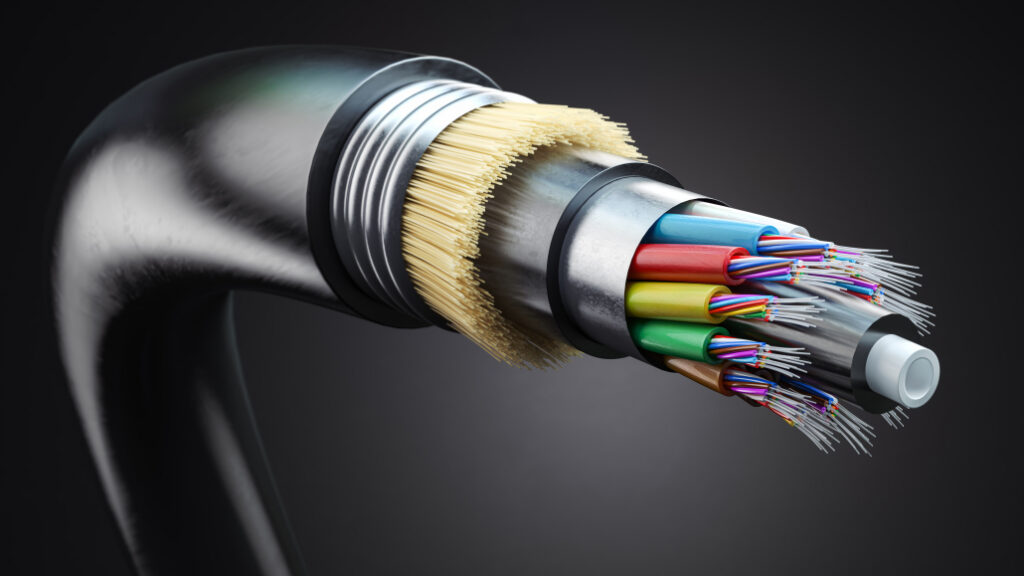
Crosstalk—unwanted signal coupling between twisted pairs—can degrade throughput and increase error rates in network cables. Cat6 Cable’s spline and foil shield variants reduce near-end crosstalk by up to 50 percent compared with Cat5e, directly supporting cleaner signal transmission at higher frequencies. In environments with high EMI or tightly bundled cables, superior noise rejection translates into more stable data links and fewer retransmissions. This reduction in interference underpins Cat6’s reliability advantage for latency-sensitive applications such as VoIP, video conferencing, and precision control systems.
Can Cat6 Support 10 Gigabit Ethernet and Over What Distances?
Yes, Cat6 Cable supports 10 Gbps at link lengths up to 55 meters by leveraging its 250 MHz bandwidth and tighter twists per inch. Beyond that distance, signal attenuation and noise accumulation significantly increase error rates, steering installations toward Cat6a or fiber for full-distance 10 Gigabit connectivity. Businesses with compact server rooms, high-density switch arrays, or PoE lighting networks can effectively harness Cat6’s 10 Gigabit capability over shorter runs, deferring the need for more expensive alternatives while still accommodating modern data throughput requirements.
When Should Your Business Choose Cat5e or Cat6 for Networking?
Selecting between Cat5e and Cat6 depends on specific organizational needs, current data loads, and anticipated growth. Matching cable attributes to use cases ensures optimal cost-performance balance and prevents over- or under-provisioning of network infrastructure.

What Business Scenarios Are Suitable for Cat5e Cable?
Cat5e’s 100 MHz rating supports Gigabit speeds across typical office floor plans, delivering dependable performance for businesses with predictable, low-density data requirements. This cost-effective cabling option simplifies maintenance and enables frequent node reconfigurations with minimal impact on the budget or installation complexity.
Why Is Cat6 Better for High-Bandwidth Business Applications?
Cat6 Cable excels when networks demand:
By offering 250 MHz bandwidth and optional shielding, Cat6 Cable reduces latency, supports lower error rates, and enables simultaneous data streams. Businesses relying on cloud computing, real-time analytics, or video production see measurable gains in throughput and operational efficiency, justifying the incremental investment over Cat5e.
How Does Cat6 Improve Network Reliability and Latency for Businesses?
Enhanced pair separation and shielding in Cat6 Cable reduce both alien crosstalk and external electromagnetic interference, resulting in consistently lower packet loss and jitter. These factors bolster Quality of Service (QoS) for latency-sensitive applications, enabling faster response times in database queries, VoIP calls, and automated control systems. Improved signal integrity reduces the need for error correction and retransmission, resulting in tangible productivity gains across mission-critical business workflows.
What Are the Cost and Installation Considerations for Cat5e vs Cat6?
Cost evaluation of Cat5e and Cat6 involves upfront cable pricing, labor costs, and termination complexity. Professional installation further influences total project budgets and ensures network resilience.
How Do Cat5e and Cat6 Compare in Initial Cable and Installation Costs?
| Cable Type | Approximate Cable Cost (per 1,000 ft) | Installation Complexity | Labor Cost Impact |
|---|---|---|---|
| Cat5e | Low | Simple | Lower |
| Cat6 | 30–50 percent higher | Moderate | Slightly higher |
Despite Cat6 Cable’s elevated material cost, its long-term value often outweighs initial outlay for growing businesses. Professional installers can optimize cable routes and terminations to avoid performance pitfalls, reducing costly rework and minimizing downtime.
What Installation Challenges Does Cat6 Present Compared to Cat5e?
Cat6 Cable’s thicker conductors and internal spline increase rigidity and require precise handling to maintain tight twist rates. Termination demands higher-specification jacks and punch-down tools to preserve shielding continuity. In retrofit scenarios with limited conduit space, these physical attributes can extend installation time and necessitate experienced technicians. Recognizing these challenges upfront allows for accurate labor estimates and minimizes unexpected expenses.
How Does Professional Installation Ensure Optimal Cat6 Performance?
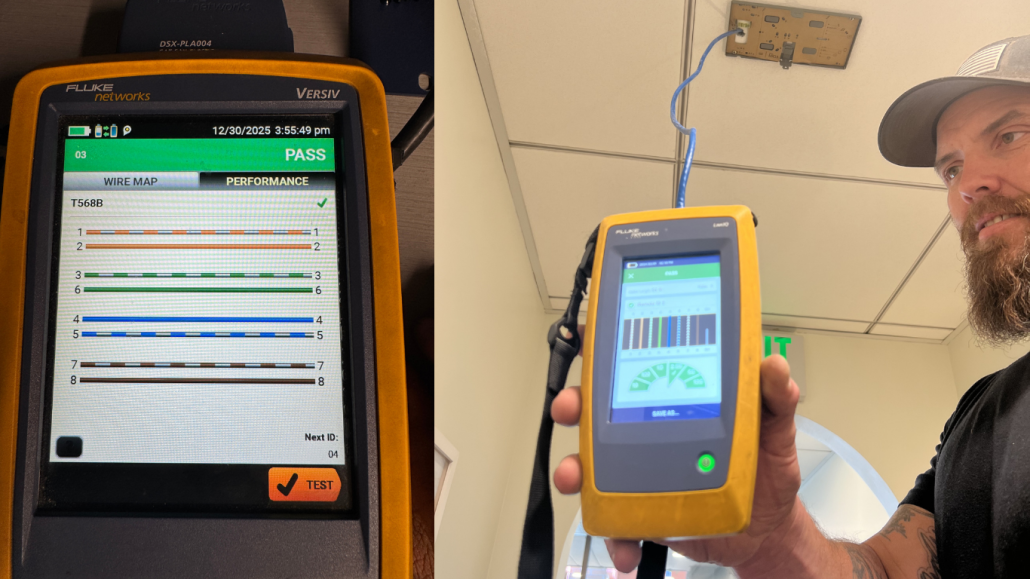
Certified installers employ industry-standard testing equipment to validate each link’s return loss, insertion loss, and crosstalk metrics, confirming compliance with performance thresholds. Ring and Ping Communications technicians follow structured cabling best practices—correct bend radius, shield grounding, and accurate labeling—to guarantee reliable throughput and simplify future maintenance. This professional approach safeguards your investment and ensures sustained network health under demanding business operations.
How Does Future-Proofing Influence the Choice Between Cat5e and Cat6?
Planning for evolving network demands hinges on understanding long-term data growth, emerging applications, and hardware compatibility. Future-proofing strategies mitigate the risks and costs of frequent infrastructure overhauls.
Why Is Cat6 Considered a Better Long-Term Investment for Businesses?
Cat6 Cable provides bandwidth headroom for applications such as 10 Gigabit Ethernet, advanced PoE standards, and high-density Wi-Fi deployments without requiring immediate recabling. Its 250 MHz rating and shielding options extend cable lifespan as data rates and interference scenarios intensify. Businesses can reduce latency by up to 30 percent and scale effortlessly when upgrading server backbones or distributed PoE networks. Choosing Cat6 today reduces the disruption and capital expense associated with tomorrow’s connectivity requirements.
When Should Businesses Consider Upgrading to Cat6a for Extended 10 Gigabit Support?
Cat6a Cable supports full-distance 10 Gbps over 100 meters by doubling the bandwidth to 500 MHz and adding enhanced foil shielding. Organizations requiring end-to-end 10 Gigabit links—such as data centers, media production houses, or high-performance computing clusters—should evaluate Cat6a at the design phase. While Cat6a entails higher costs and stiffer cable construction, its extended reach and superior noise rejection deliver maximum return in ultra-high-speed environments.
How Does Network Hardware Compatibility Affect Cable Choice?
To leverage higher cable ratings, switches, patch panels, and network interface cards must also support corresponding speeds and PoE standards. Cat6 Cable’s advantages are realized only when connected to Gigabit or multi-Gigabit switches and enterprise-grade routers. Conducting a compatibility audit ensures that each component—cabling, connectors, and active equipment—meets performance targets, preventing hidden bottlenecks and preserving seamless data flows.
How Can Ring and Ping Communications Support Your Cat5e or Cat6 Network Installation?
Ring and Ping Communications delivers end-to-end network cabling expertise, combining multi-industry experience with certified technicians and a 90-day labor guarantee. Our Southern California teams handle every stage, from site assessment and design to installation, testing, and documentation.
What Industry-Specific Network Cabling Solutions Does Ring and Ping Offer?
These tailored solutions ensure each business vertical benefits from cable choices aligned to its unique operational demands and compliance requirements.
Ring and Ping Communications: Our Certified Expertise and Guarantees
Our commitment to excellence is backed by robust credentials and guarantees. Ring and Ping Communications employs BICSI-certified technicians, ensuring that all installations adhere to the highest industry standards for structured cabling. With years of multi-industry experience across Southern California, we bring unparalleled expertise to every project, from complex data centers to essential office networks. Our 90-day labor warranty provides peace of mind, guaranteeing that our work meets and exceeds performance expectations, and any installation-related issues are promptly addressed at no extra cost. We are dedicated to delivering reliable, future-ready network infrastructure that supports your business’s critical operations.
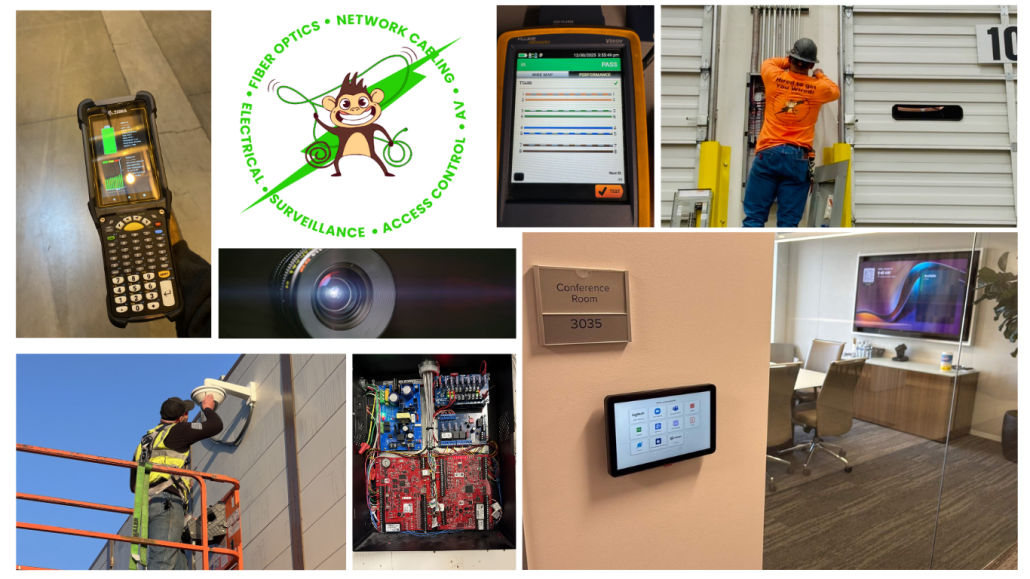
How Does Ring and Ping Ensure Fast, Certified Installation with a Labor Guarantee?
Our certified network technicians complete most installs on the same day, reducing downtime and maintaining business continuity. Every link undergoes post-termination testing using calibrated certification tools, and comprehensive as-built diagrams are delivered upon project close. With a 90-day labor warranty, businesses can be confident that any installation-related issues will be resolved quickly at no additional charge.
How Can You Request a Consultation or Project Quote for Your Business?
To discuss your network requirements and receive a customized cabling proposal, contact our Southern California office. Our team will perform a site survey, analyze data demands, recommend Cat5e or Cat6 solutions, and provide a transparent quote. Engaging Ring and Ping Communications ensures expert guidance, efficient execution, and networks built to exceed performance expectations.
Ready to Optimize Your Network?
Get a customized cabling proposal tailored to your business needs.
What Are the Most Common Questions About Cat6 vs Cat5e?
Business decision-makers often wonder whether the premium for Cat6 Cable delivers measurable advantages over Cat5e, especially in small- to medium-sized deployments. Key considerations include the speed difference between 1 Gbps and 10 Gbps, the practical distance limits for each cable type, and compatibility with existing switches and PoE devices. Cost-benefit analyses hinge on comparing upfront material and labor expenses against ROI from improved throughput, reduced latency, and simplified future upgrades. Concerns about maximum cable length highlight Cat5e’s reliable 100-meter reach versus Cat6’s 55-meter limit for 10 Gigabit. Finally, compatibility questions arise about mixing Cat5e patch cords with Cat6 backbones. At the same time, backward interoperation is feasible; overall network performance defaults to the lowest common standard, underscoring the importance of uniform cabling strategies.
Ring and Ping Communications addresses these points directly in every proposal, ensuring clarity around performance trade-offs, installation implications, and long-term cabling plans.
Businesses ready to optimize their network infrastructure can rely on our expertise and commitment to quality workmanship.
Choosing the right Ethernet cable depends on matching technical specifications to operational demands. Cat5e remains a cost-effective solution for basic networking, while Cat6 provides enhanced bandwidth, reduced interference, and a stronger foundation for future growth. Ring and Ping Communications combines deep industry expertise, certified installation protocols, and a solid labor guarantee to ensure your network cabling delivers reliable performance today and tomorrow. Please speak with our Southern California specialists to evaluate your needs and secure a customized, future-ready cabling plan.