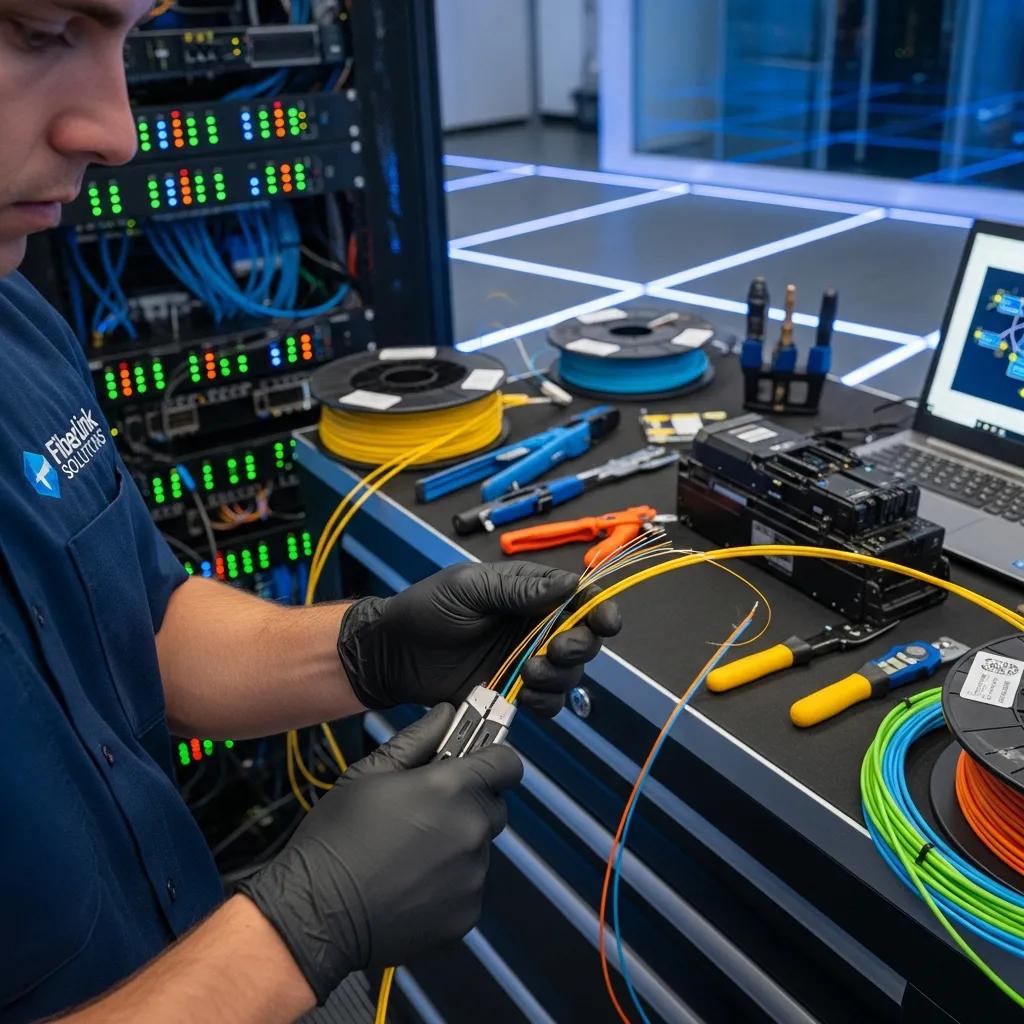
Master Your Network Cabling Plan
Up to 80 percent of network downtime stems from poorly managed cabling infrastructure, jeopardising business continuity and operational efficiency. A Network Cabling Maintenance Plan defines systematic inspections, cleaning, testing, and documentation to prevent failures, extend component lifespan, and optimise data throughput. In this guide, you will discover why a maintenance plan is crucial, the core components it must include, how proactive cable management enhances performance, tailored approaches for different cable types, strategies for preventive versus reactive care, troubleshooting workflows, and the advantages of engaging professional low-voltage specialists in Southern California.
Takeaways From The Uptime Institute's Annual Outage Analysis Report
The Uptime Institute’s 2024 Outage Analysis indicates that network issues are a primary cause of IT service outages. The report also highlights that human error is a significant contributing factor, accounting for an estimated 66% to 80% of all downtime incidents, leading to substantial financial losses for businesses.
This research directly supports the article’s assertion that a large percentage of network downtime stems from issues that can be mitigated by proper management and maintenance, including human error.
Why Is a Network Cabling Maintenance Plan Crucial for Your Business?
A Network Cabling Maintenance Plan delivers structured procedures for preserving cabling integrity, thereby improving uptime, reducing repair costs and supporting future growth.
What Are the Key Benefits of Network Cabling Maintenance for Businesses?
A maintenance plan enhances network reliability by preventing unforeseen faults, boosts performance through clean connectors and organised pathways, and supports cost savings by avoiding emergency repairs.
- Enhances Uptime: Regular checks detect wear before failures interrupt operations.
- Reduces Expenses: Planned servicing minimises expensive reactive repairs.
- Improves Performance: Clean, correctly routed cables sustain optimal signal integrity.
These advantages set the stage for measurable ROI and pave the way for scalable infrastructure.
How Does Regular Maintenance Reduce Network Downtime and Repair Costs?
Regular inspections and performance tests identify deteriorating connectors and cable damage before they escalate into failures. By replacing or repairing affected segments early, businesses limit unplanned outages and costly emergency service calls. This proactive approach fosters budget predictability and continuous network availability.
Why Is Scalability Important in Network Cabling Maintenance Plans?
Scalability ensures a maintenance plan adapts to business growth and new technology deployments. As organisations expand, structured cabling systems must accommodate additional capacity, new workspace layouts, and higher data rates. Embedding scalability principles—such as modular patch panels and reserved tray space—into maintenance guidelines secures long-term network agility and simplifies future upgrades.
What Are the Core Components of an Effective Network Cabling Maintenance Plan?
An effective plan includes scheduled inspections, cleaning protocols, environmental safeguards, precise documentation, and periodic firmware or hardware updates to maintain the health of end-to-end cabling.
How Often Should Network Cabling Be Inspected and Tested?
A comprehensive inspection schedule combines visual checks, electronic testing, and certification:
- Quarterly Visual Inspections: Identify frayed jackets, loose connections, and cable sag.
- Biannual Performance Testing: Use cable testers or certifiers to verify signal loss and near-end crosstalk (NEXT).
- Annual Certification: Engage certified technicians for full-system validation against TIA/EIA-568 standards.
This frequency balances risk mitigation with operational efficiency, ensuring the integrity of continuous cabling.
What Are the Best Practices for Cable Cleaning and Environmental Protection?
Maintaining clean terminations and controlled environments prevents contaminants and physical damage that degrade signal quality. Follow these steps:
- Use lint-free wipes and isopropyl alcohol to clean connector end-faces.
- Keep cable routes clear of dust by employing dust filters and sealed conduits.
- Monitor temperature and humidity in telecommunications rooms (ideal: 18–27 °C, 40–60% RH).
Cleaned and climate-controlled cabling pathways support consistent network performance and component longevity.
How Should Documentation and Labeling Be Managed in a Maintenance Plan?
Accurate documentation assigns unique identifiers to every cable, port and patch-panel port. Maintain an up-to-date inventory that records:
- Cable Types and Lengths
- Termination Points and Patch-Panel Numbers
- Installation Dates and Last Inspection Results
A centralised digital record expedites troubleshooting and future expansions by providing instant visibility into network topology.
Which Hardware Updates and Firmware Checks Are Essential?
Hardware and firmware are integral to cabling performance because outdated active devices and intelligent patch panels can introduce signal degradation. Table 1 outlines recommended updates:
| Device Type | Update Interval | Version Target |
|---|---|---|
| Managed Switches | Quarterly | Latest stable release |
| Intelligent Patch Panels | Biannual | Ensure compatibility with new cable standards |
| Media Converters | Annual | Vendor-certified security and performance firmware |
Keeping active-component software up to date prevents compatibility issues, enhances security, and maintains end-to-end signal integrity.
How Can Proactive Cable Management Improve Network Performance?
Proactive cable management organises physical pathways to minimise electromagnetic interference, maintain correct bend radii, and support efficient airflow in racks and conduits.

What Are the Best Cable Management Techniques for Structured Cabling?
Effective structured cabling relies on:
- Cable Trays and Ladder Racks – Provide dedicated pathways and support for large cable bundles.
- Bend Radius Controls – Use radius rods or J-hooks to enforce manufacturer-specified bend limits.
- Colour-Coded Bundling – Group cables by function (data, voice, power) for quick identification and reduced crosstalk.
These techniques streamline airflow, reduce physical stress on cables, and simplify maintenance tasks.
Effective Data Center Cable Management: Ensuring Optimal Performance and Reliability
Proper cable management, encompassing organized routing, clear labeling, and thorough documentation, is crucial for reducing downtime, enhancing airflow, and simplifying troubleshooting in data centers. Structured cabling systems, characterized by predefined standards and organized pathways, offer superior scalability and consistent performance compared to unstructured approaches.
This research reinforces the article’s emphasis on the importance of structured cabling, proper cable management, and documentation for achieving reliable network performance and reducing downtime.
How Does Proper Labeling Enhance Troubleshooting and Maintenance?
Clear, consistent labels on both ends of every cable, enabling speed fault isolation by instantly revealing the source and destination ports. Numbered markers or QR codes linked to digital records would allow technicians to locate, test, and replace specific segments in minutes, cutting mean time to repair (MTTR).
What Role Does Environmental Control Play in Cable Management?
Environmental safeguards—such as sealed conduit entries, raised-floor cooling in data centres, and humidity sensors—prevent physical and thermal stress on cabling infrastructure. Controlled environments eliminate dust ingress, temperature spikes, and corrosion risks, thereby supporting stable network performance and extending cable lifespan.
How Do You Maintain Different Types of Network Cabling?
Each cabling category demands specialised maintenance methods to preserve signal integrity and comply with industry standards.
What Are the Best Practices for Structured Cabling Maintenance?
- Regular certification tests using Fluke-grade certifiers to verify attenuation and NEXT.
- Periodic replacement of failing jack modules and patch cords to prevent incremental performance loss.
- Adherence to TIA/EIA-568 bend-radius and separation guidelines to limit interference from power cabling.
Consistent compliance with standards ensures high-speed data transmission and future-proof scalability.
How Should Fibre Optic Cables Be Maintained and Cleaned?
- Use certified fibre-optics cleaning kits with foam swabs and lint-free wipes.
- Perform insertion-loss and return-loss tests quarterly with optical-time domain reflectometers (OTDR).
- Store spare fibre reels in humidity-controlled cabinets to prevent water-induced attenuation.
These steps preserve microscopic core alignment and deliver peak bandwidth over long distances.
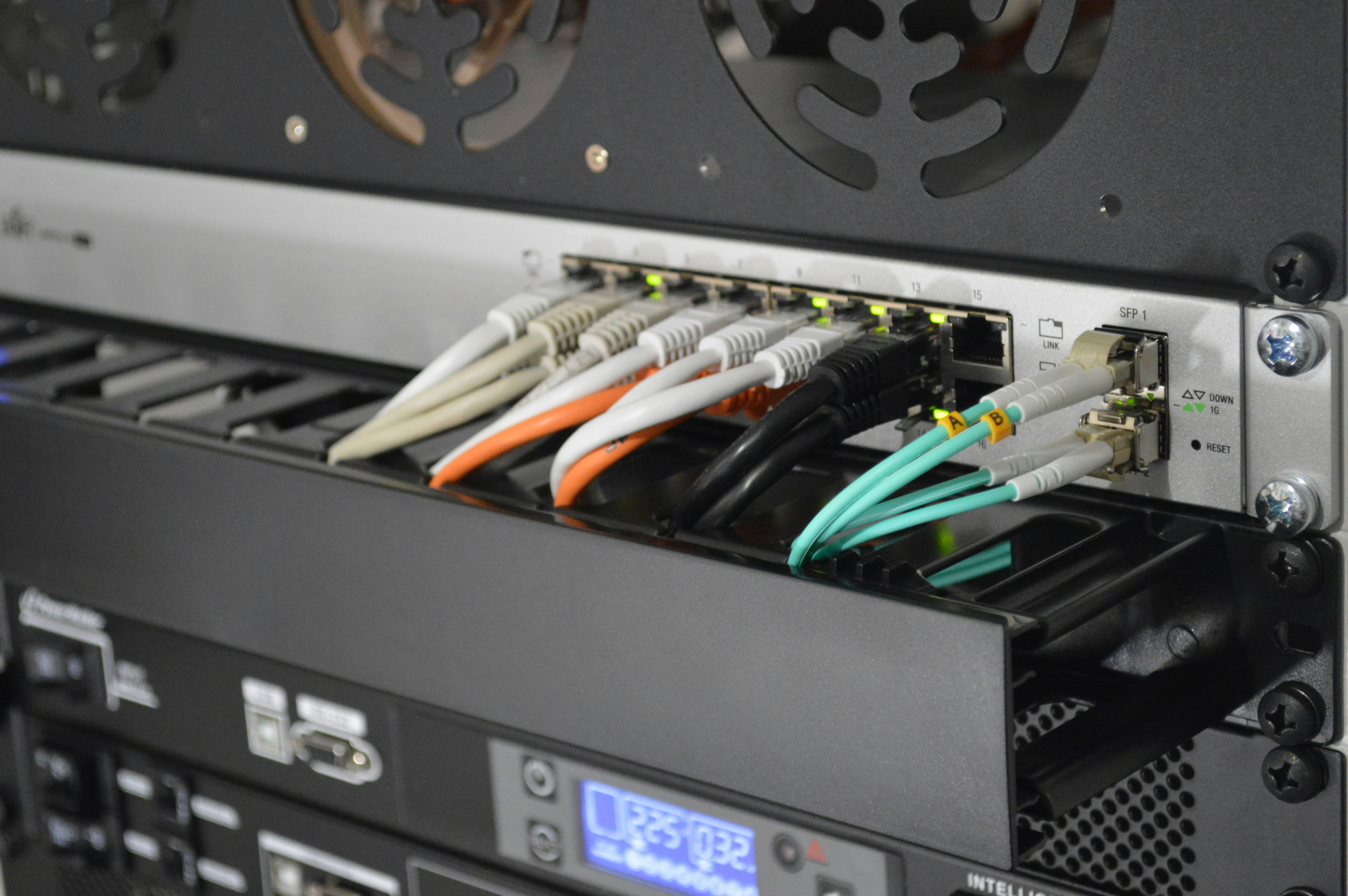
Regular testing and maintenance protocols are essential for ensuring the longevity and reliability of fiber optic networks. Key practices include routine cable inspections, Optical Time Domain Reflectometer (OTDR) testing to detect signal loss and damage, power meter testing, and microscopic inspection of fiber end-faces for cleanliness.
This information directly supports the article’s section on maintaining fiber optic cables, detailing specific testing and cleaning protocols necessary for preserving signal integrity and network performance.
What Are the Key Considerations for Low-Voltage Cabling Maintenance?
- Verifying voltage drop limits in extended runs.
- Inspecting terminations for corrosion in coastal environments.
- Ensuring fire-stop ratings at wall and floor penetrations remain intact.
Regulatory compliance and environmental resilience underpin both performance and safety.
What Are the Differences Between Preventive and Reactive Network Cabling Maintenance?
Cabling maintenance can follow scheduled preventive tasks or unscheduled reactive interventions, each with distinct objectives and processes.
How Does Preventive Maintenance Extend Cabling Lifespan and Prevent Failures?
Preventive maintenance applies routine inspections, cleaning, and testing to identify degradation before it causes outages. By systematically replacing worn connectors and reorganising cable bundles, organisations avoid signal loss, maintain warranty conditions, and prolong system service life.
When Is Reactive Maintenance Necessary and How Is It Managed?
Reactive maintenance addresses unexpected faults—such as physical damage from accidental disconnections or environmental incidents. A structured reactive workflow includes:
- Immediate fault isolation using handheld testers.
- Temporary cable rerouting to restore connectivity.
- Complete repair or replacement during scheduled downtime.
This approach balances rapid recovery with long-term infrastructure integrity.
How Can Proactive Monitoring and Alerts Improve Network Reliability?
Integrating continuous monitoring tools—such as patch-panel sensors and network analyzers—triggers alerts when metrics (signal loss, bit errors) exceed thresholds. Early warnings empower technicians to intervene before performance degradation impacts end users, elevating uptime and reducing operational risk.
How to Troubleshoot Common Network Cabling Issues Effectively?
Efficient troubleshooting combines visual cues, diagnostic testing, and repair protocols to restore network health swiftly.
What Are the Signs of Signal Degradation and Physical Damage?
Common indicators include intermittent connectivity, reduced throughput, and visible insulation cuts or crimps. Discoloured connectors or bent pins often signal compromised cable health, prompting immediate replacement to avoid cascading failures.
How Can Connectivity Issues Be Diagnosed and Resolved?
Diagnose connectivity faults by tracing cable continuity with tone generators and cable tracers, measuring attenuation with certifiers, and isolating faulty runs. Resolving issues typically involves reterminating RJ45 jacks, swapping patch leads, and reseating connectors to reestablish clean signal paths.
What Are the Best Practices for Cable Repair and Replacement?
- Always re-terminate with factory-tested connectors and approved crimp tools.
- Match cable category and shielding specification when replacing sections.
- Document each repair event in the maintenance log, including test results and technician notes.
Adhering to these standards maintains network performance and simplifies future audits.
Why Choose Professional Low-Voltage Cabling Maintenance Services in Southern California?
Engaging certified experts ensures compliance, rapid response, and tailored plans aligned with local environmental and regulatory factors.
What Makes Ring & Ping Communications a Trusted Provider?
Ring & Ping Communications offers BICSI-certified technicians, regional presence across Orange, LA, Riverside, and San Diego counties, and proven success in warehousing, medical, and finance sectors. Their expert teams deliver detailed site assessments, preventive maintenance contracts, and emergency support to safeguard critical network infrastructure.
About Ring & Ping Communications: Your Trusted Cabling Experts
This comprehensive guide to Network Cabling Maintenance has been developed by the seasoned professionals at Ring & Ping Communications. With decades of combined experience, our team comprises BICSI-certified technicians dedicated to delivering excellence in low-voltage cabling solutions across Southern California.
Our expertise spans a wide array of industries, including warehousing, medical facilities, and finance, where we have consistently provided robust, scalable, and compliant network infrastructures. We pride ourselves on our regional presence across Orange, Los Angeles, Riverside, and San Diego counties, ensuring rapid response and localized support for our clients.
At Ring & Ping Communications, we believe in proactive solutions that safeguard your critical network infrastructure, reduce downtime, and support your business’s long-term growth. Our commitment to quality, precision, and customer satisfaction is at the core of everything we do.
How Do Customised Maintenance Plans Benefit Different Industries?
Different operations demand bespoke strategies:
- Warehousing: heavy-duty conduit protection and high-capacity cable trays.
- Medical: dual-redundant fibre paths and clean-room compatible cabling.
- Finance: encrypted cabling runs and secure access-controlled cable pathways.
Tailored plans align physical infrastructure with each industry’s performance, safety, and compliance requirements.

How Can You Request a Consultation or Download a Maintenance Plan Template?
To explore a customised Network Cabling Maintenance Plan template or schedule an on-site assessment, contact Ring & Ping Communications. Their experts will guide you through risk assessments, infrastructure audits, and ongoing support options to ensure reliable, scalable network performance.
Reliable cabling maintenance empowers organisations to reduce downtime, control costs, and plan for future growth. Partnering with specialised low-voltage service providers delivers expert guidance, local responsiveness, and industry-specific solutions—ensuring your network infrastructure remains a strategic asset rather than a hidden liability.